William Paton
10/3/1806 -
6/11/1838
William was Calum's, Jamie's and Pippa's four
times great grandfather.
William was born in Perth in 1806, during the reign of the British king
George III, and was christened in the same year on 16th March. The following is the OPR record for the event:
Carscroft, Monday the tenth day of March One Thousand
Eight Hundred and Six was born William Patton, lawful son to William Patton, weaver in Carscroft, and Christian Hay his spouse
and baptised the Sixteenth day of March said year by the Reverend Mr.James Hewison Moody, Minister of the Gospel in Perth.
William was raised in the family cottage at Carr's Croft,
and in his youth no doubt helped his father and mother out in the family's weaving work, by threading the pirns with
the yarn needed to weave with. He would also have helped with the daily chores in the cottage and in the croft plot behind
the cottage where they would have grown vegetables and perhaps kept a cow for milk. But the weaving life of his father, and
of his uncle and cousin in a nearby cottage, did not appeal to William, and he set his sights on other careers.
William decided to train as an apprentice plasterer,
and after a suitable period of training, became a journeyman, and then a fully fledged plasterer. He lived in Edinburgh
for a time, possibly having moved there to take up his apprenticeship, and it is here that he met his wife, Joan (Ann)
Woodroffe, from Port of Menteith in Stirlingshire, and daughter of soldier Joseph Woodroffe and Janet Paterson. The couple married in Edinburgh on November 4th 1831, and the old parochial register entry reads:
4th November 1831, St Cuthberts, Edinburgh,
County of Midlothian
William Paton, Plasterer, Residing in No. 1 Leslie Place, Stockbridge, and Ann Woodroff,
Residing in No. 28 Gilmore Place, both in this Parish, Daughter of the late Joseph Woodroff, Gardener in Stirling, have been
three times proclaimed in order to marriage in the Parish Church of St Cuthberts and no Objections have been Offered.
Married
on the fourth day of November thereafter by the Reverend David Marr Minister of the United Associate Secession Congregation
of Lothian Road.
The couple returned to Perth, to William's home
at Carr's Croft, where they resided for the birth of their three children. As
a plasterer, William may well have been a member of the Wrights' Corporation in the city, but I have yet to
check whether any of their records have survived.
However, William's and Joan's life together at Carr's Croft was to be short and tragic. On January 10th 1836, just a couple of months after the death
of William's mother, the couple's eldest daughter, Joan, who like her mother was also known more simply
as 'Ann', died of whooping cough (A.K.Bell: PE 1/20/2 p.81).
Two years later, William himself became seriously
ill from consumpsion (tuberculosis), and died on November 6th. The burial register for Greyfriars incorrectly lists his
age as 30, when he was in fact 32, but it is the correct William, as he is described as a "plastier", i.e. a plasterer. William
was duly buried in Greyfriars Cemetery, most likely beside his daughter and his mother (A.K.Bell: PE1/20/2 p.103).
Widowed and alone, with two young children to
raise, William's wife Joan remarried in 1839 to a weaver called Stewart Fenwick, and moved out of Carr's
Croft to take up residence in the nearby street of Pomarium. (As a point
of interest, the cottages at Carr's Croft were finally demolished in 1935 - only one cottage remains, now used as a sawmill.
The street named Carr's Croft does remain though).
CHILDREN of WILLIAM
PATON and JOAN WOODROFFE:
(1) Joan Woodroof
Paton
b: 21/2/1833 d: 10/1/1836
Joan was born in Perth in February 1833 (OPR 387/00):
Carscroft West Church Parish Perth the Twenty first
day of February Eighteen hundred and and Thirty three was Born
Joan Woodrooff Paton lawful Daughter to William Paton in said Parish
and Joan Woodrooff his Spouse & Baptised the Tenth day of March said year by the Reverend James Esdaile Minr of the East
Church Parish of Perth.
Joan's life in the family home at Carr's Croft
was to be tragically short, as on January 10th 1836, she tragically died of wooping cough (Source: Burial reg, A.K.Bell Library).
__________________________________
(2) William Hay Paton
b: 18/2/1835 d:
20/1/1894
William was Calum's and Jamie's great great great grandfather - see below.
__________________________________
(3) Janet (Jessie) Brown Paton
b:
9/7/1836 d: 22/2/1866
Janet, better known as Jessie, was born in Perth on July 9th 1836 and christened in the town eight
days later on the 17th (OPR 387/00):
Carscroft West Church Parish Perth the Ninth day of
July Eighteen hundred and and Thirty six was Born
Janet Brown Paton lawful Daughter to William Paton Plasterer in
the said Parish and Ann Woodroffe his Spouse & Baptised the Seventeenth day of July said year by the Reverend William
Mather Minister of the Gospel at Stanley.
In the 1851 census for Perth she is found living in Pomarium, Perth, with her mother, stepfather,
brother William, and her half brothers Gilbert, Stewart and Joseph, as
well as her half-sisters Helen and Ann. Her occupation is listed as winder, presumably a
pirn winder, to help her stepfather Stewart, who was a warper in the weaving industry (Cen:1851/387/F/1/25).
In the 1861 census, Jessie is still with her mother and stepfather, at 4 Pomarium in Perth. She is
still unmarried, and listed as a winder of cotton yarn (Cen:1861/387/28/1).
On May 5th 1865, Jessie, at this point working as a powerloom weaver, finally married to 23
year old James Martin, a baker (journeyman) living at 129 High Street, Perth, and son of Ann Martin,
with his father not listed. Jessie was still living at 4 Pomarium, along with her family, and attending her wedding were the
Church of Scotland minister, Reverend John Murdoch, and witnesses Peter Laing, and her sister Helen Fenwick.
Tragedy was to strike however within a year. Jessie gave birth to a daughter Jessie Ann Martin,
on February 9th 1866 at her mother's home of 4 Pomarium. But thirteen days later, Jessie died in the house, the cause
being a disease of the throat. Her widowed husband had the terrible ordeal of having to register his daughter's birth and
his wife's death on the same day, February 22nd 1866, in Perth (GROS: 1866/387/00/88). Tragically, it appears that whatever
the disease of the throat was that Jessie died from was to be inherited by her baby daughter, for three years later, on November
12th 1869, three year old Jessie died of ulceration of the throat.
CHILD of JESSIE PATON and JAMES MARTIN:
(1) Jessie Ann Martin
b: 9/2/1866 d: 12/11/1869
Jessie was born at 4 Pomarium on February 9th 1866, at 4.30pm. Her father informed the registrar
on the 22nd (GROS:1866/387/00/111).
Jessie tragically died on November 11th 1869 at 9.30pm, at her father's house of 129 High Street.
The cause was harlatina ulceration of the throat, as certified by William Ray. Her father informed the registrar the following
day (GROS:1869/387/00/567).
William Hay Paton
18/2/1835 - 20/1/1894
William was Calum's, Jamie's and Pippa's three
times great grandfather.
William was born on February 18th 1835 in Perth, during the reign of the British
king William IV. The Perth old parochial register recorded the event:
February 1835 p.365
Carscroft
West Church Parish Perth the Eighteenth day of the February One thousand eight hundred and thirty five was born William Hay
Paton lawful Son to William Paton Plasterer in the said Parish and Joan Woodroffe his spouse and Baptised the Twenty second
day of February said year by the Reverend James Esdaile Min of the East Church Parish Perth
On November 6th 1938, when William was just three and
a half years old, his father died of tuberculosis. Just eight months later, in July 1839, his mother remarried to Stewart
Fenwick, who became his stepfather, and the family moved from Carr's Croft to the neighbouring Pomarium district.
At some stage in the next few years, it appears that
William made his way to Glasgow to take up an apprenticeship as a currier, a leather worker. Work as a currier entailed finishing
off the leather after several levels of treatment in order to create the basic material from which items could then be made.
It was not a very hospitable job, with the smell of many chemicals such as urine choking the atmosphere of the workshops within
which William would have worked.
24 year old William married Janet Roger, aged 23, on 2nd December 1859, in Kinclaven, Perthshire, Scotland. Janet was a domestic
servant and at the time of her marriage she was living in Airntully, in Kinclaven parish, although she had recently been living
in Craigie, near Caputh. William had been living in a house called Goose Dubs on Stockwell Street, Glasgow. Their marriage
was in the United Presbyterian Manse, Kinclaven, carried out by the Reverend David Young (Register of marriages 1856-1860,
entry 3567). The witnesses to the wedding were William's new father-in-law, James Roger, and his stepfather, Stewart Fenwick.
After the marriage, the newlyweds settled initially in Glasgow. Their first son, James, was born in 1860 in the Calton
district. In the 1861 census, William is still listed as living at 304 Gallowgate, Calton, along with his wife and son James,
and is listed as a currier, aged 26 (Census: GROS 1861 644/4/48/4/3). Later in the year, William is again listed as a
currier living at 15 Hunter Street in the Glasgow valuation roll index (Mitchell Lib).
In 1862 William junior was
born in High Church, Glasgow. But by 1864 the family had settled in Blackford, Perthshire, where Calum's and Jamie's great
great great grandfather David Hepburn Paton was born, followed by the three girls.
In 1866 there was a major period of family grief when William and his wife,
Janet, had to deal with the brutal murder of Janet's mother, Janet Rogers (nee Henderson), at her uncle
William's farm at Mount Stewart, Forgandenny, Perthshire. The murder was committed with an axe in the farm kitchen whilst
William was at Perth market for the day. The investigation lasted for nearly a year, until the trial of the farm ploughman,
James Crichton, the verdict of which ended up as an unsatisfactory non-proven, which must have been equally painful (see
The Mount Stewart Murder page for more details).
On October 13th 1870, Doctor William Henderson, uncle to Janet's mother (i.e. her great uncle), died in Perth at the age of 86. In his will he bequeathed a small
sum to each of his niece's daughters, meaning that at either Martinmas or Whitsunday after his death, Janet and William received
a sum of £50 (the equivalent of £2925 in 2002), which was undoubtedly a welcome benefit.
By 1871, the census tells us that William was still
working as a currier in Blackford. By 1881, although he was still in Blackford, he was temporarily unemployed. It is not known
for how long.
According to the Glasgow electoral register of 1888, William and Janet had moved to 40 Springfield Road
in Bridgeton, where William had most likely moved to try and find work.
In 1891 the Glasgow census records tell us that William
was still working as a currier. The census tells us that he was sharing the tenement with his wife Janet, his daughters Margaret
and Mary, and son Joseph, whilst in the next door tenement were his daughter Andrewina and sister-in-law Annie Rodger. The
document also tells us that their apartment within the tenement had three rooms or more with at least one window. (Census:
GROS 1891/644/01/090/13).
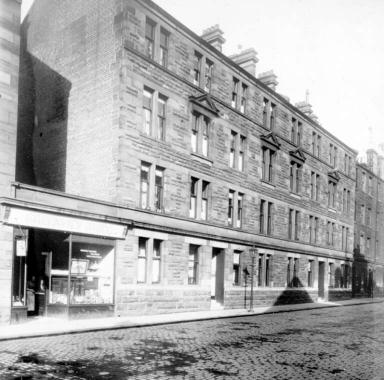
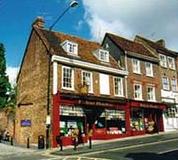
|
|
| 108-94 Cumberland St, 1906, inhabited by Margaret Paton (108, at fore) & Janet Paton (94,far end) |
William died at home at 8.30pm, 20th January 1894. The cause was heart disease, as certified by Dr.Robert
Greenhill. James Paton returned from London on hearing the news, and informed the registrar in Glasgow on the 22nd. William
was buried in Glasgow's Eastern Necropolis on the 24th, the lair (#720, compartment 21) paid for by his wife at a cost
of £1 and 4 shillings. There is no headstone on his grave. (In later years his daughter Mary and wife Janet
were also buried in the lair, as was his sister-in-law, Annie Roger.) William
did not leave a will.
William's wife Janet then moved to 94 Cumberland Street, where she died on November 3rd 1906 at
10.50pm. The photo to the right was taken earlier that year - her tenement flat is to the far end of the block, and
to the fore is number 108, where Janet's daughter Margaret lived. The cause of Janet's death was cardiac failure, and the
informant to the registrar two days later was her son William (GROS: 1906/644/4/151).
CHILDREN of WILLIAM HAY PATON and JANET ROGER:
(1) James Paton
b: 13/10/1860 d: 21/3/1928
James was born at 9.50pm on October 13th 1860, at 304 Gallowgate, Calton, Glasgow,
and his father was present at his birth. The event was subsequently registered at the Glasgow registrar on the 16th (GROS:1860/644/02/1289).
In the 1861 census, James was listed as living with his mother and father at 304 Gallowgate, Calton, in the parish of
St. John's, part of the greater parish of Chalmers in the city (GROS:644/4/48/4/3).
James moved in approximately 1863/1864 to Blackford, Perthshire, with his parents
and his brother William. After basic schooling, he initially took up work as a a railway clerk, and on the night of the
1881 census he is found as a visitor at his father's house, and was thus recorded as being in Blackford.
In approximately 1886, James married Elizabeth
Dunlop, daughter of William Dunlop and Mary Vallance, from Old Monkland in Scotland,
and who was the same age as himself. Elizabeth had been born in Old Monkland on October 8th 1860 and christened in Dunbeth
Relief Church, Coatbridge on November 4th 1860. The marriage did not happen in Scotland, however, but in England,
and from the 1901 English Census it would appear that they may have married in the Brixton area of London. After the event,
they certainly settled in Brixton, where they had their first two children, William and Mary. By approximately 1889/1890,
the family had relocated to Hendon, in west London. James' son William later grew up to become a minister of the Presbyterian
church, and in a biography on him published in March 1949, it describes the family home at Croydon as 'a Scottish household
transported to an English suburban scene' ("William Paton" by Margaret Sinclair, p.9, SCM Press Ltd). In another book
on William in 1980 ("Red Tape and the Gospel", Eleanor M. Jackson p.16, Plogiston Publishing), further testimony to the Scottishness
of the household is also recorded:
Although the story that Paton's parents sent him to his first day at school
wearing a kilt must be regarded as apocryphal, an important element in Paton's character was the fervour with which he supported
all things Scottish.
In 1891, James is found in the English census to be living at 2
Brent View Terrace in Hendon, with his wife, his children William, Mary and Janet,
and his sister Catherine Paton. At
this point, James is listed as being an assistant manager to a Sewing Machine Company (GROE:RG12/1049/2/7/61). This was in
fact the Singer Sewing Machine Company, and at this point it is believed that James was working at their London office based at
39 Foster Lane. The London office did not manufacture the machines, this being carried out in the Scottish factories of Kilbowie,
near Glasgow, and later Clydebank. It controlled the majority of Singer's European trade acted as the clearing house for machines
destined to the company's southern European markets (northern Europe being co-ordinated from the company's office
in Hamburg).
On January 22nd 1894, James
is found to have briefly returned to Glasgow to register the death of his father, and no doubt to grieve with the rest
of his family.
The London offices of the Singer company moved in 1895 "to the beautifully situated building in St.
Paul's Churchyard under the shadow of the great Cathedral of St. Paul". This information was obtained from an unpublished
company history written in 1950, and sourced by Singer historian Heather Carmen Martin. Heather has also confimed from her research that James was in 1901 listed in company papers as the Singer agent for South
Central London. By this stage, there were 25 classes of Singer sewing machine being manuafctured in 200 different varieties.
Many thanks to Heather, whose own website can be accessed by clicking on the following link: Singer Memories.
In the 1901 English Census,
James was listed as the 40 year old manager of a sewing machine company in Croydon, Surrey. The family, comprising of his
wife and six children, were resident a house called "Raina" on Addiscombe Grove. As well as his family, there were three
other people present in the house - his cook, 30 year old Charlotte Barrett from Oxfordshire; his housemaid,
17 year old Nellie M. Wright, from Croydon; and his sister-in-law, 44 year old retired school teacher Mary
Dunlop (born October 20th 1856), from Old Monkland, Scotland.
Between 1904 and 1908,
James is curiously listed in the Glasgow Voters Rolls as living at 40 Springfield Road in the city, the home of his
parents (Mitchell Library). But he seems to have maintained his presence in London, for on December 26th 1908, at the registration
of the death of his sister Margaret in Glasgow, he is again listed as living at "Raina", 23 Addiscombe Grove, Croydon,
Surrey.
In the 1911 English census, James is noted as a 50 year old sewing machine
company's manager, resident at 23 Addiscombe Grove, Croydon. Along with his wife, whom he has been married to for 25 years, and
six children, his sister in law Mary Dunlop is also again resident, along with his 24 year old servant Edith
F. Brame, from Stowmarket in Suffolk. The house is noted as having had eleven rooms. Later that year his son William
married to Grace MacKenzie MacDonald, the secretary of Independent Labour Party leader and future prime minister
Ramsay MacDonald, and it appears fom another biography on William, published in 1980, that the marriage initially had 'parental
opposition from both sides' (Red Tape and the Gospel, by Eleanor M. Jackson, p.15, Phlogiston Publishing).
James is further listed in the 1913 Kelly's Directory of Surrey, in which
he is recorded as still living at 23 Addiscombe Grove, described as a private residence (Kelly/Surrey/1913 - p.123/p.631).
In the biography on his son William, there is a brief description of the family's time with the church
in Croydon, and of the family's subsequent move:
William Paton came of strongly rooted Presbyterian stock. His parents were
members of St. George's Church, Croydon, till they moved, in 1914 to North London; and his father was prominent among its
lay officials. St. George's was notable at that time for the vitality of its work among children and young people....
According to his grandson Colin Kingsley, James was a regular
traveller to Belgium, and it is appears that he was a frequent visitor to his younger brother David
(Calum's and Jamie's great great grandfather) and his family. One of Colin's treasured possessions is an ornate Belgian clock
inherited from his grandfather's household, constructed in the 1890s.
When war broke out in 1914, David elected to stay with his family in Belgium, but
was soon forced into hiding when the Germans gave out the order for the internment of all British men of fighting age. David
died in hiding in April 1916, and from 1917, James was involved in correspondence with his sister-in-law, Jessie Paton
(nee MacFarlane), trapped in Brussels, acting as a go between for her, R. & J. Dicks in Glasgow, and the British Prisoners of
War Department at 10 Downing Street. Jessie was by now in a desperate plight, following David's death, and her son John
had since been taken by the Germans to the civilian prisoner of war camp known as Ruhleben, in Spandau, Berlin. As
well as acting for Jessie, James also helped his nephew John out by sending him food parcels at Ruhleben,
in addition to trying to convince the government to send him some money whilst incarcerated. The correspondence is now held
at the National Archives in Kew, England.
The Government sent the following note from Jessie to James on July 26th 1917:
144733/1204/P
The Secretary
of the Prisoners of War Department presents his compliments to Mr. James Paton, and is directed by Lord Newton to state that
he learns from the Netherland Legation at Brussels that Mrs. James Paton, residing at 100 rue d’Espagne,
Brussels, wishes the following message communicated to him:-
“Dear
Jim, As things here have become impossible for us, I should like to know what you would advise me to do. Matters concerning
the Firm here have been decided & an indemnity of three months given, viz. until the
15th Sept. 1917 when the 75 francs I have been receiving since the
16th March 1915 will cease. Then of course I shall be entirely without means. Myself & the two children
who are still with me. The small sum left after the exceptionally heavy expense of poor Davi’s illness and death is
gone & had I means I should be allowed only to touch a very small sum monthly. The cost of living here at the present
moment is 10 times (and in some cases 20 times) more than in 1914 so you can well imagine my extreme anxiety in case we will
be as we have been. Over the winter in such case I shall be in a bad way. Kindly write to the firms and explain as I could
not explain myself properly from here. I shall leave it to your good judgement as to what you will say & arrange for me
as I know you will do everything in my interest. Kind regards to every one. We three are pretty well. Hoping this will find
you all the same. Your loving sister J. Paton.”
Prisoners
of War Department,
Downing
Street, S.W.1
July
26, 1917
In response to Jessie's letter, James sent the following note through to the Prisoners
of War Department, before contacting the Firm in Glasgow:
July
28th 1917
The Secretary
of the Prisoners of War Dpt.
Downing
St, SW1
Dear Sir,
Your favour
144733/1204/P of July 26th sending me copy of a letter from Mrs David Paton Brussels my sister in law was duly
received.
This is
merely to acknowledge your communication for which I thank you, and to say I will write you later when I have made some enquiries
re “the Firm”.
Yours very
sincerely,
James Paton
I am writing
from my home address:
You wrote
me to our Management office Singers 42/43 St Paul’s Churchyard
After writing to R. & J. Dicks in Glasgow with Jessie's dilemma, the Firm
contacted the Government with the following reply:
144733/165848 AUG 24 1917
R &
J Dick, Ltd, Greenhead Works, Glasgow.
23rd
August 1917
Secretary
of State for Foreign Affairs, Prisoner of War Department, Foreign Office.
OUR REFERENCE
No. 46/449
Mr James
Paton has forwarded to us copy of a letter which he received through your Department from his late brother’s widow in
Brussels, Mrs. David Paton, 100 Rue d’Espagne, from which letter we note
that she is likely to be in very necessitous circumstances in the near future.
Since the
death of her late husband, we have been allowing her 75 francs a week, which sum she obtained from the drawings of our Belgian
business. As this business has now been closed by German officers, however, she will no longer be able to obtain the 75 francs
in question.
We should
be much obliged if your Department could help us in this matter, either by helping Mrs. Paton to return to this country via
Holland, and at our expense, or (if this is not possible) by paying her 75 francs a week on our account.
We may add
that the late David Paton was an old and trusted servant of this company, and we trust that your Department will find it possible
to assist us in helping his widow.
We are,
Sir,
Your obedient
Servants,
R. &
J. Dick, Ltd.
M. Porter,
Assistant Manager.
With R. & J. Dicks agreeing to send Jessie an allowance, James sent the following
letter to 10 Downing Street and the Prisoners of War Department in the hope that they would forward it to Jessie in Brussels
(the words scored through were those censored by the Government when transmitting the message to Jessie):
August
25th 1917
The Secretary
Prisoners
of War Dpt
Downing
St SW1
Dear Sir,
Your favour
144733/1204/P of July 26th was duly received and acknowledged and I now take the liberty of asking that you will
present my compliments to Lord Newton & request the favour of transmitting the following letter to my Sister in law Mrs
David Paton 100 rue d’Espagne Brussels. Now that I have communicated with
the firm and they are kindly arranging with you for something to be done for her she will be expecting a reply from me.
Dear Jay!
Your message to me by the favour of Lord Newton of our Foreign Office was duly received. I need not say how much we
all regretted to hear of your change in circumstance & the sad plight it forecasted for you and the two children. I wrote
at once to the firm, and they have kindly undertaken to assist you. As however negotiations are being made through the
favour of Lord Newton I will merely say that you will I am sure find them satisfactory. We are all well now, but we have
had Nettie with pleurisy & Mother with influenza, but both are quite better
again. Altho’ in the former case we had a specialist so serious was the beginning of the illness. Love to you all,
Your affect.
Brother
James Paton
I
thank you in anticipation of you being good enough to send forward the above letter. While
writing may I trouble you concerning another matter. My nephew, Mr David Paton's son Johnnie is a prisoner at Ruhleben, Germany. When
of age he was taken away and is there now. I send him occasional parcels through the Dept at Thurlo Place, So. Kensington.
Could they, or would you be able to send him a little money as well. I feel from a letter he has sent , that he is straitened
in this way somewhat. I shall take it as a favour if you will be good enough to let me hear from you on this point. With thanks,
Yours faithfully
James Paton
James then received the following letter from the Government on September 1st 1917:
Reg. No. 144733/1204/P
Prisoners of War Department
September 1st 1917
The Secretary of the Prisoners of War Department presents his compliments to Mr. James
Paton in reply to his letter of the 25th ultimo, is directed by the Controller to state that the Netherland Minister
at Brussels is being requested to communicate to Mrs David Paton the message contained therein at Brussels.
The Secretary is to add that a separate reply will be forwarded to Mr. Paton regarding
the remittance of money to his nephew Mr. John Paton, who is interned at Ruhleben.
PRISONERS OF WAR DEPARTMENT,
DOWNING STREET, S.W.1
1st September , 1917.
Jessie received her allowance, and remained in Brussels until the end of the war,
whilst John was also not released from Ruhleben until the war was over.
In the 1921 English census, recorded June 19th 1921, James was found at 34 The
Mall, Southgate with two of his daughters, a visitor and a servant. James was a 60 years and 8 months old married
travelling auditor for the Singer Sewing Machine Company Ltd, based at 42/43 St. Paul's Churchyard, and as having been born
in Glasgow. The daughters present were Muriel Elizabeth, aged 29 years and 7 months, born in Hendon, Middlesex,
and a ledger clerk for Dalgety House at 16 Finsbury Circle, Australian Shipping Merchants, and Ella Dunlop,
aged 21 years and 6 months, born in Croydon, Surrey, and a mother's help. The visitor was Dorothy Beatrice McLeod,
aged 21 years and 9 months, born in Manila, Philippines, a British born resident, and a private governess, whilst the servant
was Ada Elizabeth Wilmore, aged 14 years and seven months, born in Plaiston, London, with both parents alive,
and working as a general servant at 34 The Mall, Southgate, N14. James' wife was not present (Source: 1921 English census;
RD 132, RSD 6, ED 10, Edmonton, Southgate, Middlesex)
On August 31st 1921, James was one of the witnesses present at the wedding of his
daughter Lilian in Southgate, and on the wedding certificate, he was again noted as a travelling auditor to a sewing
machine company (see below).
James finally died on March 21st 1928 at his home of 3 The Close, in Southgate,
Edmonton. There were four main causes for his death, being uraemia, chronic nephritis, hypertrophied prostate (operation),
and cancer of the penis (operation). At the time of death, James was listed as being a 67 year old sewing machine company's
auditor. The informant to the registrar was Eric W. Philip, James' son-in-law, who lived at 20 Oakbank Avenue,
Moston, Manchester. It is not yet known how Eric fits into the picture, but seems to be the son of one of James' daughters.
Just prior to his death, Colin Kingsley recalls seeing his grandfather for the one and only time in his life,
and he recalls that James had a small white beard, and of his grandfather being bedridden.
James left an estate to the value of £7957 3s 2d, with the executor noted
as Kingsley Smith, cashier. The following is the transcript of his will:
BE IT KNOWN that James Paton of 3 The Close Southgate in te County of Middlesex
formerly of Hillcrest 34 The Mall Southgate aforesaid died on the 21st day of March 1928 at 3 The Close aforesaid.
AND BE IT FURTHER KNOWN that at the date hereunder written the last Will
and Testament of the said deceased was proved and registered in the Principal Probate Registry of His Majesty's High Court
of Justice, and that administration of all the estate which by law devolves to and vests in the personal representative of
the said deceased was granted by the aforesaid Court to Kingsley Smith of "Croindene" Ludley Grove Epsom in the County of
Surrey cashier the sole Excecutor named in the said Will. dated the 23rd day of April 1928.
Gross value of estate £7957 3s 2d.
Net value of Personal estate £6788 2s 2d
I JAMES PATON of Hillcrest 34 The Mall Southgate N.4. in the County of Middlesex
hereby revoke all former wills codicils or testamentary dispositions made by me and declare this to be my last will I appoint
Kingsley Smith Esqr. of 16A Stonor Rd Kensington London W.14. and _ of_to be the EXECUTOR of this my will
I leave the following specific legacies_- I leave the following pecuniary
legacies_I give all my property both real and personal unto my dear wife Elizabeth Paton of Hillcrest 34 The Mall Souhgte
London N. 14. Middlesex in the County of Middlesex
IN WITNESS whereof I have set my hand this 5th day of May one thousand nine
hundred and twenty three - JAMES PATON - Signed by the above named James Paton as his last will in the joint presence
of himself and us who at his request and in such joint presence have hereunto subscribed our names as witnesses the
words "in residue of" on the first line of the second page hereof having been first struck out and the word "executors" on
the eighth line of page one hereof having first been struck out and the word "Executor" having been substituted in lieu thereof
- GEORGE ERNEST CLARKE 31 The Mall Southgate N. 14. - AMELIA ELIZA MARY SLEE 31 The Mall Southgate N. 14.
PROVED 23rd April 1928.
Tragically,
James died just a few months before the wedding of his daughter Ella. In her wedding certificate,
he was described as being a sewing machine manufacturer's auditor and inspector (deceased).
At some stage following James' death, Colin Kingsley recalls
that his grandmother Elizabeth moved to Watford to be looked after by her daughter Muriel,
and he recalls many visits by his own mother Lilian to his granny in what he remembers to be a very large
house. The 1939 National Identity Register for England notes that Elizabeth and Muriel were based at 16 Upton Road in the
town, with Elizabeth noted as being 'retired'. Her date of birth was listed as 8 OCT 1860 (Source: 1939 National Register;
TNA R39/1639/1/1639I/024).
Elizabeth eventually passed away in Watford at the age of 90, between April
and June 1950 (GROEW D 1950 Q2 Watford Vol.4b p.254).
Finally, as a footnote to history, it is known that the Singer offices in St. Paul's
Churchyard, at which James worked, were totally destroyed in the London Blitz of 1940.
CHILDREN of JAMES PATON and ELIZABETH
DUNLOP:
1) Rev. Dr. William Paton D.D.
b: 13/11/1886 d: 21/8/1943
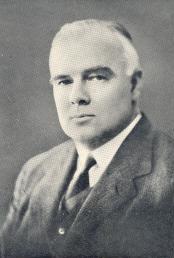
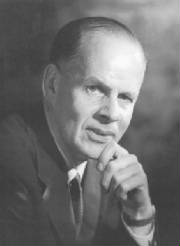
|
|
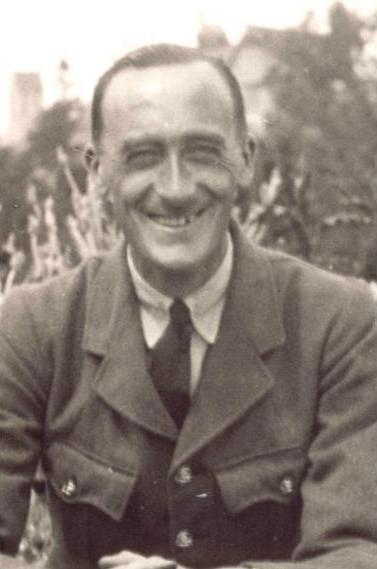
| The Reverend William Paton |
William was born on November 13th 1886 at the family home of 25 Trelawn Road, Lambeth,
London, England. At the time of his birth his father was recorded as a sewing machine factory's manager. The birth was
registered by William's father in Lambeth on the 20th (GROE:Oct-Dec 1886/1d519). In later lfe, he was colloquially
referred to as 'Bill'.
In 1891, Bill is found in the English census to be living at 2 Brent View
Terrace in Hendon (GROE:1891/RG12/1049/2/71/68), and was educated at Archbishop
Whitgift School, Croydon, after the family's move to the Surrey town.
In the 1901 census Bill was at home
at "Raina", Addiscombe Grove, Croydon, where he was noted as having been born in Brixton, London (GROE:1901/RG13/639/193/43/186). He
then attended Pembroke College, Oxford, and Westminster College, Cambridge,
where he graduated with a second class honours in Classical Mods in 1906. In 1908 he obtained a 2nd class degree in Lit. Hum.,
obtaining an M.A. in 1911. At the History of Missiology website, an entry for Bill notes that he was "converted to a living faith in spring 1905". The
site further notes that he helped to rebuild the Student Christian Movement (SCM) when the Cambridge Inter-Collegiate Christian
Union went its own way in 1910, and then became the men’s candidates’ secretary of the Student Volunteer Missionary
Union.
In the 1911 English census, Bill is listed with his family at 23 Addiscombe Grove, Croydon,
and as a 24 year old theological student. Later that year, he married Grace MacKenzie MacDonald. Bill was ordained a Presbyterian minister in 1916 and soon after went to India in order to work as a YMCA secretary.
Bill returned to England in 1919 to work with the Student Christian Movement. On June 19th 1921,
Bill was recorded in the English 1921 census at 'Farr', Wildwood Road, Hendon, Middlesex. He was listed as a 34 year old married
minister of religion working for the Student Christian Movement of Great Britain and Ireland, which was based in 32 Russell
Square, London. Also in the household were David Macdonald Paton, aged 7 years and 9 months, born in Hendon,
and James Christopher Macdonald Paton, aged 5 years and 10 months, born in Golders Green, as were William
Drummond Macdonald Paton, aged 4 years and a month, and Elizabeth Mary Macdonald Paton, aged 1 year
and 8 months. There were two visitors, Dorothy Steven, aged 25 years and 9 months, who was from Edinburgh,
and a secretary of the Student Christian Movement, and Muriel Naomi Stoneham, aged 31 years and 10 months,
from Ventnor, Isle of Wight, who was a welfare worker of no fixed abode, and working on her own account. Bill's wife Grace
was not present. (Source: 1921 census, Hendon, RD 130, RSD 3, ED 28)
Just a couple of months later Bill presided as minister for the marriage of his sister Lilian
to Kingsley Smith at St. George's Presbyterian Church, on the corner of St George's Road and Fox Lane
(Palmers Green), Southgate, Edmonton. Shortly after he returned to India to become the first secretary of the National Christian
Council of India. The Missiology website seems to indicate that they were based in Calcutta, where Bill's wife Grace was noted
as having done much to improve the lot of nurses based there.
In 1926 the couple were back in England, settling at St. Albans, Herefordshire. No sooner had they
arrived than Grace was organising a restaurant for striking miners. In the following year, Bill commenced as editor on
The International Review of Missions Seven years later, in 1928, he is also again noted as having performed his
sister Ella's wedding to Henry Guy Cheston Sewell at the same church.
On September 29th 1939 an impromptu census was carried out for the purposes of national registration
at a time of war. Following a Freedom of Information Act enquiry in January 2010, I was able to access the information for
William at his address at 27 Beaconsfield Road in St. Albans. William was noted as having been born on 13 NOV 1886, married
and a minister of religion. His national registration number was also given as DEPB 154/1. With him in the house were his
wife Grace, born 29 JAN 1887 and performing 'unpaid domestic duties' (no: DEPB 154/2), his son William
D. M. Paton, born 5 MAY 1917 and a medical student (no: DEPB 154/4), his daughter Elizabeth M. Paton,
born 13 OCT 1919 and a student, and two further individuals, most likely boarders - Ellen O. S. Todd, born
14 JUN 1924, 'at school' (no: DEPB 154/6), and Liesel Rosenwald, born 9 OCT 1926 and also 'at school'
(no: DEPB 154/7). The FOI information only listed those who were now deceased who had been enumerated, and it can be seen
that someone with the national registration number of DEPB 154/3 was not included. It is possible that this was William's
son Michael, who is still alive and residing in Sheffield (see below).
Bill is listed in the 1941 edition of Who's Who, where he is recorded as enjoying walking and
golf as hobbies, and is further listed as a member of the United University Club. His address is noted as 27 Beaconsfield
Road, St. Albans, with his telephone number as St. Albans 984!
Bill Paton died on August 21st 1943. The following is his obituary from the Times two days later:
THE REV. DR. W. PATON
SECRETARY OF INTERNATIONAL MISSIONARY COUNCIL
The Rev. William Paton, D.D., secretary of the International Missionary
Council and editor of the International Review of Missions since 1927, died in hospital at Kendal, Westmorland, on
Saturday. He was taken ill while on holiday.
Born in London on November 13, 1886, he was educated at Whitgift School
and at Pembroke College, Oxford, where he graduated with second-class honours in Lit. Hum. in 1908. He was a Presbyterian
and later went to Westminster College, Cambridge. From 1911 to 1921 he was mission secretary of the Student Christian Movement,
and was general secretary of the National Christian Council of India, Burma, and Ceylon from 1922 to 1927. For five years
he was joint secretary of the provisional committee of the World Council of Churches, and he was the author of several books
on the world's religions, including "The Message of the World-wide Church" and "The Church and the New Order".
Dr. Paton, who received the honorary degree of D.D. from Edinburgh University
in 1939, married Grace MacKenzie eldest daughter of the rev. D. MacDonald, and had four sons and two daughters.
His funeral, which was held in St. Albans, was also recorded in the Times on the 27th (p.7):
FUNERAL
THE REV. DR. W. PATON
The Archbishop of Canterbury was represented by Canon C. E. Hudson at the
funeral of the Rev. Dr. William Paton, which took place on Wednesday at St. Albans. The first part of the service was held
in St. Albans Abbey. The Dean of St. Albans officiated and Canon Hudson read the Lesson. relatives and others present included:-
Mrs Paton (widow), Lieutenant J. C. M. Paton, R.N.V.R., and Mrs. Paton,
and Dr. and Mrs. W. D. M. Paton (sons and daughters-in-law), Miss E. M. M. Paton and Miss C. M. M. Paton (daughters), Mrs.
E. Paton (mother), Miss M. D. Paton and Miss M. Paton (sisters), Mr. and Mrs. Sewell (brother-in-law and sister), Mrs. G.
W. M. Mackay, Miss. M. Sinclair.
Mr. P. J. Patrick (representing the Secretary of State for India and the
India Office), the Rev. Dr. Hugh Martin (representing the Ministry of Information), the Bishop of Fulham (representing the
Bishop of London), the Bishop of Chichester, the Dean of Worcester, Dr. R. Bond (representing the Methodist Church), representatives
of the Swiss and Czechosloval Churches, Bishop J. C. Mann (representing the Church Missionary Society), the Rev. Harry Bailey
(representing the Chaplain-General and the Deputy Assistant Chaplain-General).
The Rev. Dr. W. T. Elmslie and the Rev. D. Chalmers Lyon (representing
the Presbyterian Church of England), the Rev. J. W. Decker, Miss Gibson and Miss M. Wrong (International Missionary Council),
the Rev. Eric Fenn (representing the B.B.C.), Canon G. L. Goshing (representing the S.P.C.K.), Canon F. A. Cockin, Canon W.
E. S. Holland, Dr. J. H. Oldham, representatives of the London Missionary Society, the Baptist Missionary Society, the Y.M.C.A.,
the Salvation Army, the Methodist Missionary Society, Universities Mission to Central Africa, Conference of British Missionary
Societies, Zenana Bible and Medical Mission, Sword of the Spirit Movement, United Committee of Christian Universities of China,
British Council of Churches, Student Christian Movement and Christian Evidence Society, Indian Church Aid, Edinburgh House
Press, Friends Service Council, and the Famine Relief Committee.
The burial took place at St. Albans Cemetery.
A memorial service will be held in London on a date to be announced later.
A funeral service for Bill was held at St. Paul's Cathedral, London, on September 28th 1943. In his
address, the Archbishop of Canterbury stated the following:
There was so much that seemed to depend on him alone. There were so many
who turned to him for guidance in relation to most important and intrictae questions. If any man in these last days could
be called indispensable for doing what seemed to many of us the most important tasks entrusted to Christian people, it was
he.
His friend and colleague John Mott also penned the following words for the International Review
of Missions (Vol XXXIII Jan 1944, No. 129):
One cannot understand Paton without thinking
of him in relation to his family. One hesitates about entering into this sacred circle, but I must bear testimony. In all
my wide acquaintance I recall no one who furnishes a better example of maintaining throughout all their years, from their
tender childhood right up into the years of entering upon the serious burden-bearing and conflicts of life, such constant,
unhurried and helpful relations to each of his six children. Time will show, let us believe, that this was one of the most
highly multiplying contributions of his life - not only through what these children will achieve but also through the
guidance and stimulus of his example to other fathers.
Finally, it is worth quoting the Reverend Eric Fenn, from the Presbyterian Messenger (Oct-Dec 1943):
He had that gift which lies so near to the grace of God - a sense of humour.
(I can see now that odd, premonitory twitch of the lips which heralded his better-salted remarks!) And he was human and lovable:
his immense pride and delight in his family of four sons and two daughters could show itself, wholly unashamed, at all times,
while his love for his wife seemed to feed on the deep theological differences which lay between them, instead of being baffled
by them.
Children of William Paton and Grace MacDonald:
i) David MacDonald Paton
b: 9/9/1913 d: 18/7/1992
An entry for David is online at the Biographical Dictionary of Chinese Christianity, although it is not a hundred percent accurate (Ramsay MacDonald was not his grandfather!). He is also listed in Who Was
Who 1991-95. However, the best account must be that written by his son, David Michael MacDonald Paton, in the preface to a
second edition of his father's book, "Christian Missions and the Judgment of God".
David was born on September 9th 1913. On June 19th 1921, he was recorded in the English 1921 census
at 'Farr', Wildwood Road, Hendon, Middlesex, with his father and three siblings. He was listed as aged 7 years and 9 months,
born in Hendon, and at school full time. (Source: 1921 census, Hendon, RD 130, RSD 3, ED 28)
When his parents moved to India in 1921, he attended school and spent his holidays with his maternal
grandmother in St. Albans, in what his son later described as a 'painful and difficult' separation from his parents, though
he had a somewhat better experience when staying with Joe and Mary Oldham, friends of his parents.
David attended Repton School, whose headmaster was Geoffrey Fisher, one day to become Archbishop of
Canterbury, before going to Brasenose College, Oxford, where he gained his BA in 1936 and his MA in 1939. It was in his second
year at Oxford that he was converted to a lifelong faith in Christianity, following a student evangelistic campaign in Coventry.
Although the son of a Presbyterian minister, his father had consented to his mother teaching her anglo-catholic views to their
children, and it was the Anglican path that David was to choose. (David's mother Grace had authored a political book in 1915
entitled "The Child and the Nation", which she had dedicated to her son, and he appears to have inherited some of her radicalism
in his outlook on things).
A passenger manifest from September 7th 1936 records David as having returned from New York to Liverpool
on board the Cunard vessel 'Laconia'. David was noted as 22 and a student resident at 4 Worley Road, St. Albans, Herts, England.
At Birmingham University, David then spent three years from 1936-39 as secretary of the Student Christian
Movement, a role and location which he enjoyed. Whilst here, he wrote 'Blind Guides', in which he criticised the movement
for not dealing adequately with the increasing threat of marxism.
In 1939 David was ordained by his old headmaster Geoffrey Fisher as a deacon, prior to taking up a
vocation as a missionary. From 1939 to 1944 he lived in Beijing (Peking), China, working first
as a YMCA secretary, and then as a missionary with the Church Missionary Society. He lived with a traditional mandarin family
and learnt Chinese. From this family he witnessed the importance that the Chinese placed in the spirits of their ancestors,
as recorded in his son's preface to his father's story in "Christian Missions and the Judgment of God" (p.8):
On the wall facing me were three portraits: father, grandfather, and great
grandfather. Beneath them was a table, with on it a small wooden casket containing the tablets of the ancestors, and in front
of it a piece of red paper with the father's name in beautifully written characters. At each side was a red candle. At the
front of the table was a bowl or two of offerings of food. In turn, first the males, and then the females, kowtowed three
times each before the table... The whole ceremony was rather impressive.
David believed passionately that for a missionary to be able to work effectively as an evangelist
in China, he or she had to have a deep understanding of Chinese culture, and some sympathy, and throughout his time there
he was very pro-Chinese. When the Japanese occupied Beijing, David helped to smuggle surgical instruments to a bunch of Chinese
guerillas in Yanjing, believing that it was important to stand up for his principles.
In 1941 David travellled to Hong Kong, via Shanghai, and at Hong Kong was ordained a priest in St.
John's Cathedral by Bishop R. O. Hall, later to become a subject for a biography by David. Between August 1941 and July 1944
he worked amongst students at Chongqing (Chungking). Conditions were atrocious, and there was hostility from some elements
of the Chinese society, who remembered Britain's role in the treatment of the country after the Opium Wars. He realised it
was better not to try to dictate the agenda but to work under the leadership of a Chinese national called Jiang Wen Han in
his missionary work. It was whilst in Chongqing that David learned of his father's sudden and unexpected death.
David returned to the UK on January 26th 1945, having sailed from Bombay on the P & O vessel 'Strathnairo',
arriving in Liverpool. He was noted as a 'clerk in Holy Orders' who had been resident in China The home address he gave was
27 Beaconsfield Road, St. Albans, Herts.
Having arrived back in England, David worked as chaplain and librarian at Westcott House Theological
College in Cambridge. Whilst here in September 1945 he became engaged to Alison Georgina Stewart,
the daughter of John Stewart, a Church of Scotland missionary in North China and Manchuria, and his wife
Gladys. An engagement notice was carried in the Times of September 28th 1945:
THE REV D. PATON AND MISS STEWART
The engagement is announced between the Rev. David Paton, chaplain of Westcott
House, Cambridge, eldest son of the late Dr. William Paton and Mrs. Paton of St. Albans, and Alison, elder daughter of Dr.
and Mrs. John Stewart, of Edinburgh.
The wedding itself was announced in the same newspaper on September 14th 1946:
PATON : STEWART. - On Thursday, Sept. 12. 1946 at St. John's Church, Edinburgh,
the REV. DAVID M. PATON of Foochow, China, son of the late Rev. Dr. Wm. Paton and Mrs. Paton, of St. Albans, to ALISON G.
STEWART, daughter of the Rev. John and Mrs. Stewart, of Moukden, Manchuria.
In January 1947, David and Alison arrived at Fuzhou (Foochow) in Fujian (Fukien) province, China,
where David took up work at Fujian Union Theological College, at a time when the country was in the midst of a civil war.
David's work as a missionary was threatened seriously with problems affecting hyperinflation and shortages, and the church's
structure itself, unable to take to the strain of the situation. Things worsened when Fuzhou fell to communist control in
1949, forcing the Chinse church to cut its ties with foreign missions in order to show loyalty to the new regime. At the same
time, a Chinese church faction called 'Little Flock' was also determined to destroy the foreign based missions. In January
1951, David, Alison, and by now their three sons, left China for the relative safety of Hong Kong, where Alison had some treatment
for cancer, after which the family sailed for England. They arrived in London on April 16th, having left Hong Kong on board
the Peninsular and Oriental S. N. Co. vessel 'S. S. Carthage'. David was noted as a 37 year old priest, Alison a
30 year old housewife, with sons William aged 3, John aged 1, and David, 5 months old. Their home address was given as 13
Watson Walk, St. Albans, Herts.
With Alison recovering from cancer, her youngest son David was temporaily taken to
Edinburgh to be looked after by her parents, whilst the family initially settled in St. Albans. It was here that David
senior penned 'Christian Missions and the Judgment of God', published in 1953.
From 1952 to 1956 David became the vicar of Yardley Wood in Birmingham, and then became secretary
for the Council for Ecumenical Co-operation of Church Assembly until 1963, working at Church House. From 1956 to 1959 he also
worked as editor of the SCM Press, though this was pretty much deemed by himself and his biographers
to have been a wrong turn taken by him. From 1959 to 1963 David was then secretary of the Council for Ecumenical
Co-operation of Church Assembly, and amongst his achievements set up the Nottingham Faith and Order Conference of 1963. The
Times of May 17th 1963 then recalls David's appointment to the Missionary and Ecumenical Council of the Church Assmbly:
ECCLESIASTICAL NEWS
The Rev. David Macdonald Paton, secretary of the Council for Ecumenical
Cooperation, has been appointed secretary of the Missionary and Ecumenical Council of the Church Assembly which is to come
into being on January 1 next year.
The new council, which will replace the Overseas Council and Council for
Ecumenical Cooperation, will continue and develop their work.
Its primary function will be to stimulate responsibility for the mission
and unity of the Church at home and overseas, and to provide a link between the assembly and the missionary societies of the
Church of England, the other provinces of the Anglican communion, the World Council of Churches, and the British Council of
Churches and the Conference of British Missionary Societies.
Mr. Paton, who is 49, was for ten years a missionary in China.
From 1964 to 1969 he then worked as this council's secretary. On June 29th 1964 David attended
the second All Christian Peace Assembly in Prague, as noted in the Times of June 30th (p.8, "Christian peace Assembly"). A
newspaper report in the Times from Thursday November 18th 1965 further describes his workload, with a visit to the West
Indies:
ANGLO-METHODIST VISIT TO WEST INDIES
The Rev. A. Kingsley Lloyd, immediate past president of the methodist Conference
and secretary for Methodist connexional funds, and the Rev. David M. Paton, secretary of the Missionary and Ecumenical Council
of the Church Assembly and Anglican regional officer for the British Isles, are leaving for Barbados on Saturday.
They have been invited to attend as advisers the second meeting of the
consultation on church union between the Anglican Church of the Province of the West Indies and the Methodist Church of the
West Indies, to be held in Codrington College from November 22 to November 27.
David was appointed Honorary Canon of Canterbury Cathedral, as noted in the Times of July 2nd 1966
(p.13):
DIOCESE OF CANTERBURY
The REV. T. H. SUTCLIFFE, Secretary of the Church of England Council for
the Deag, the REV. L. LLOYD REES, Chaplain General of Prisons, and the REV. D. M. PATON, Secretary of the Missionary and Ecumenical
Council of the Church Assembly and Anglican Communion Regional Officer for the British Isles, to be Honorary Canons of Canterbury
Cathedral.
He again pops up in the Times in an article from August 10th 1968 airing his concerns about a possible
forthcoming nuclear war:
Danger of Future 'Nuclear War'
By a Staff Reporter
The danger of a catastrophic international nuclear class war, of coloured
against white, was put to the Lambeth Conference yesterday by the Rev. David Paton, secretary of the Missionary and Ecumenical
Council of the Church of England.
A consultant at the conference, Mr. Paton said: "We should see the signs
of the times and see hat we are likely, if we do not repent, to have the catastrophe of international class war of coloured
against white, waged with nuclear weapons. This may not be in the next five years, but if we go on as we are it is likely
to occur in the time of our children and our grandchildren."
The conference was debating a subsection on race in a report on renewal
in unity. The section asked the conference to call upon people everywhere to witness to the unity and equality of the whole
human race wherever racial tensions or prejudices existed, whether enforced by the law of the land or as part of the inherited
culture.
On April 16th 1970, David is further noted as a signatory to an appeal in the Times (p.6) urging
the British Government not to abandon its previous ban on the use of CS Gas, as outlawed by the Geneva Convention.
From 1970 to 1981 David was rector of St Mary de Crypt and St John the Baptist in Gloucester. In 1972
he was also appointed chaplain to Queen Elizabeth II, a position he held until 1983.
Amongst David's other positions in life, he was chairman of the Churches' China Study Project from
1972 to 1979, a member of Gloucester Civic Trust from 1972-1977 and appointed an Honorary Fellow of Selly Oak Colleges in
1981.
|
|
| David and Alison, about 1985 |
Following David's death on July 18th 1992, an obituary was recorded for him in the Guardian on July
24th:
David Paton
Canon who got the Anglicans hot under the collar
Canon David Paton, who has died at the age of 78, was arguably the most far-sighted English Anglican this century
and yet was denied any influential post, let alone a bishopric. Did his outspoken understanding of contemporary issues and
his sharp insight into people make him a threat to people responsible for easing round pegs into round holes? He had a brief
and unfortunate spell running the SCM Press but administrative incapacity was no bar to at least one Archbishop of Canterbury.
David's father, William Paton, was a missionary in India and one of the architects of the World Council of Churches.
That inheritance gave his son a breadth of vision shared by few of his contemporaries. His undergraduate days at Brasenose,
Oxford, led him into the life of the Student Christian Movement, then a fruitful recruitment ground for foreign missionaries.
he became one of the willing vicitims of Bishop R. O. Hall of Hong Kong, known as the 'body snatcher'. He was priested there
shortly before the Japanese occupation and served for three years in east Szechuan. In 1946 he married Alison Stewart, who
had been born in China, and they went back to Fukien for four years before returning to Britain.
After a parish in Birmingham David went to Church House, Westminster, as Secretary of the Missionary and Ecumenical Council
of the Church Assembly - that michievous acronym. In 1958 he expressed bewilderment about his future role in the Church Archbishop
Michael Ramsey was one of his spiritual heroes yet only a Canterbury canonry and a chaplaincy to the Queen were forthcoming.
In 1969 he became Rector of St. Mary le Crypt, Gloucester, where it fell to him to oversee the bicentenary of the Sunday School
Movement, founded there by Robert Raikes. He spent 12 years there.
He was a constant writer and reviewer of books. Christian Missions and the Judgement of God reflected on his
China experience. He promoted Ronald Allen's belief in a 'tent-making ministry', to break the clerical monopoly of church
life. He edited Breaking Barriers, the official report of the 1975 WCC Assembly in Nairobi, which threw off its First World
domination, and he served the Board of Christian Aid. His last work before his painfully prolonged illness was his biography
of R. O. Hall , of whom he wrote: "In my private picture of Christ there a good many RO-ish touches".
David knew long ago that God is calling the Church both to ordain women and to heed the demands of the Third
World for justice. Perhaps some people feared, with reason, that given the authority he migh have laid episcopal hands on
a deaconess nearer home than Hong Kong, as his hero the 'body snatcher' did in 1944. But if he had been given greater responsibility,
the Church of England would be now less busy contemplating its own navel.
(Christopher Hall)
David Macdonald Paton, born September 1913; died July 18, 1992.
In March 2009, I had the great pleasure to talk on the phone with David's son John. He described how his
father had always been quite socialist in his outlook, and yet disappointed at the same time never to have been made
a bishop within the Church of England. He was in fact offered the role of Bishop of Hong Kong, but turned it down believing
that the job should by right be given to a Chinese candidate. Whilst disappointed never to have been made a bishop in Britain,
he was delighted when appointed to the role of chaplain to the Queen, one of a handful of members of the clergy who were
required to preach to the Royal Family throughout the years. For this role he was given a red ceremonial cassock to wear,
of which he was very proud, and when he was cremated in 1992 following his death, he was dressed in this robe.
John also described that David had for a short time joined the SDP party, but resigned and returned
to Labour, disillusioned at the efforts of David Owen and the others to make a difference.
Children of David Paton and Alison Stewart:
William Stewart Paton
John MacKenzie Paton
David Michael MacDonald Paton
ii) James Christopher MacDonald Paton
b: 1/8/1915 d: 5/1/1989
On June 19th 1921, James was recorded in the English 1921 census at 'Farr', Wildwood Road, Hendon,
Middlesex. He was aged 5 years and 10 months, born in Golders Green, and in education full time. (Source: 1921 census, Hendon,
RD 130, RSD 3, ED 28)
The Times of March 23rd 1934 (p.16) records that James, attending Repton School, was awarded a Hulme
Exhibitions scholarship to Brasenose College at Oxford.
James was a lieutenant in the Fleet Air Arm and the RNVR, but according
to his nephew John MacKenzie Paton had a traumatic time during the Second World War, working on the Atlantic
convoys. He was so distressed by what occurred during the conflict that he would never talk about it following its eventual
conclusion. The London Gazette of May 1st 1942 (p.1918) shows that he was promoted from Temp. Sub-Lt. (A) J. C. M. Paton to
be Temp. Lt. (A). on February 10th 1942.
On March 4th 1943, James's engagement to Joan Blaikie was announced in the Times (p.7):
LIEUTENANT (A) J. C. M. PATON, R.N.V.R., AND MISS J. B. BLAIKIE
The engagement is announced between James Christopher Macdonald, second
son of the Rev. William Paton, D.D., and Mrs. Paton, of 27, Beaconsfield Road, St. Albans, and Joan Barbara, only daughter
of the Rev. S. G. Blaikie and Mrs. Blaikie, of the Vicarage, Crawley Down.
The wedding took place at Cuckfield, Sussex in the second quarter of the year (GROEW: 1943 Q2 Cuckfield,
Sussex, Vol. 2b p.339). In the marriage indexes, Joan's entry is actually recorded twice, with her name listed as both Joan
Blaikie and Barbara J. Blaikie.
Following the war, James entered the civil service. On August 26th 1947, as a 32 year old man he
was noted arriving at Liverpool on board the M.V. Tarkwa, a ship of Elder Dempster Lines Ltd, having sailed from Takroadi.
In the manifest he was recorded as a Political Officer in the Gold Coast, resident at Brasenore College, Oxford. On January
23rd 1950 he was again recorded arriving back in Liverpool on board the 'Accra', a ship of the Elder Dempster Lines Ltd, having
sailed from the West Coast of Africa. The mainfest shows that he was now resident at The Vicarage, Crawley Down, and that
he had sailed first class with his wife and daughter from the Gold Coast. James returned to Ghana on June 12th 1950 from Liverpool
on board the 'M.V Robert L. Holt', a ship of the John Holt Line Ltd.(Source: FindmyPast.com).
In November 1951, James was again recorded arriving at Liverpool, having embarked at the port of Takoradi.
Now aged 36, James' address was the same, but his occupation was listed as District Commissioner, Gold Coast (Source: Ancestry.co.uk).
He returned to Ghana on March 27th 1952, sailing first class again from Liverpool to Takoradi on board the M.V. Apapa captained
by W. Munt, with his job noted as admin officer (Source: FindmyPast.com).
On December 14th 1956, James set sail for Lagos in Nigeria from Liverpool, though on this occasion
was accompanied by his wife Joan (born May 16th 1923) and his son Michael, though not by his daughter Ann. He was again noted
as an admin officer. The family were again noted heading for Ghana. The only additional information from this manifest is
that James had his passport issued in South Africa (Source: FindmyPast.com).
On August 25th 1958, James was yet again recorded arriving in Liverpool on board the M. V. 'Apara',
having sailed again from Takoradi and via the Canary Isles for Britain. He had been resident in Ghana and working as
an administrative officer, and was intending to stay in England for the next six months. His UK address was now given as Knowle
House, Lingfield Road, East Winstead, and he was recorded as being on holiday leave. James' birthday was further recorded
as August 1st 1915 (Source: Ancestry.co.uk). On January 8th 1959 he again returned to Ghana (Source: FindmyPast.com).
It is believed that James later ran a student hostel, possibly linked to the School of Oriental
and African Studies, near Russell Square in London.
James eventually died on January 5th 1989 in Norwich, Norfolk (GROEW: Jan 1989 Norwich Vol 10. p.2000).
Children of James Paton and Joan Blaikie:
Anne Elizabeth Paton
b: 1944
Anne was born in Sussex in 1944. She today resides in Walberswick, in the
south of England, where she works as an artist.
The Chappel Galleries website holds a page on Anne at the following link: Anne Paton. The following paragraph from the website describes her earlier life:
Born in a Vicarage in Sussex 1944. Educated at an Anglican convent where
she was a boarder from the age of seven. Anne escaped at an early age into the world of painting. Forbidden by her father
to go to art school she was sent to Mrs Hosters Secretarial College. Determined to leave office life she managed to obtain
a grant and went to art school as a mature student. She studied at the Chelsea School of Art (1975-78) where she specialised
in printmaking under the tutorship of Peter Baer and painting with Eric Shanes.
The website also has examples of many of her wonderful paintings. The following was also found on
Anne at the Southwold Art Circle website:
After a career in publishing working in production and as a designer,
Anne now works full time as a painter in Walberswick. She received her training at the Chelsea School of Art where she studied
painting and printmaking with Eric Shanes and Peter Baer. She has has had her work shown in the Royal Academy Summer Exhibitions,
the New English Art Club, The Chappel Galleries, The Southwold Gallery and Snape Maltings Gallery and others. Her work is
included in many private and public collections here and abroad.
Anne has been featured as the Artist of the Month at the Snape Maltings
Gallery on several occasions. In 2007 she had her first solo exhibition at the Chappel Galleries.
She likes to work expressively, responding to the landscapes and
seascapes of East Anglia using mixed media. She endeavours to convey the essence of a scene with an economy of line. Publications:
Artist & Illlustrator 1997, Walberswick, East Anglian Interludes 1880-2000 by Richard Scott, Who’s Who in Art (2006),
Artists in Britain since 1945, David Buckman (2006)
Michael Colin Paton
b: 9/12/1954 d: 24/1/1998
Michael was born in England on December 9th 1954.
Michael married Sally Chapman, with whom he had a son. Little else is currently known
about him, though it is believed he might have worked in a local authority.
iii) Sir William Drummond MacDonald Paton CBE
b: 5/5/1917 d: 17/10/1993
A knight's tale! William was born in Hendon, London, Middlesex on May 5th 1917. On June 19th
1921, William was recorded with his family in the English 1921 census at 'Farr', Wildwood Road, Hendon, Middlesex. He
was listed as aged 4 years and a month, and born in Golders Green, London. (Source: 1921 census, Hendon, RD 130,
RSD 3, ED 28)
Although he moved out to India with his parents in 1921, he returned in 1923 due to ill health, to
live with his maternal grandmother and two elder brothers in St. Albans. Bill then attended Miss Unwin's school in the town,
and from 1927 attended Winchester House School in Brackley.
Against family expectations, Bill then opted for a career in science, rather than religion. In 1935
he attended New College, Oxford, and in 1938 graduated with a first in physiological sciences three years later, and finished
his training in 1942 after subsequently attending University College Hospital in London.
In 1942, Bill married Phoebe Margaret Rooke(b.1916), who
he had met in London.
After working initially for a couple of years as a pathologist, Bill joined the medical research Council
in Hampstead, where he studied physiological problems encountered during diving and submarine escapes, followed by research
into histamines. He later drafted the regulations for diving and submarine escapes used by the Royal Navy, and was therefore
directly involved in the creaton of the training routine that his second cousin Colin Paton (Calum's and
Jamie's grandfather) would later go through when he joined the submarine service in the 1960s.
In 1952 Bill was appointed to the medical unit at University College Hospital and the department of
pharmacology at University College London. Two years later he became the first Vandervell chair of pharmacology at the Royal
College of Surgeons, where he set up the first ever department dedicated solely to the discipline. Whilst here he became interested
in the science of drug addiction.
In 1959, Bill was then invited to take the chair of pharmacology at Oxford University, which he held
until his retirement in 1984. Whilst here he set up a high pressure laboratory and contiued his studies into decompression sicknesses,
and the formation of bubbles in the bloodstream etc. In the 1970s he also continued his research into drug addiction, setting
up a cannabis research group, and he was strongly opposed to moves to legalise the drug in the UK, concerned at the drug's
dangers. In 1968 Bill was awarded a CBE for his dedication to public affairs, and in 1979 was knighted by the Queen, with
his wife becoming Lady Paton.
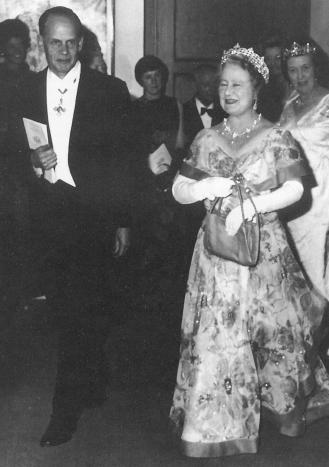
|
|
| Sir William Paton escorts the Queen Mother to a Royal Society dinner on 16 NOV 1965 |
The following quote from the Oxford Dictionary of National Biography shows that his temperament was
very similar to that of Calum's and Jamie's grandfather and father:
At a personal level Paton was a calm and thoughtful individual who seldom
showed anger or strong emotion, except when confronted by uninformed prejudice, which he detested. His advice, frequently
sought, was given only after due consideration of the problem, and its history.
William died at his home of 13 Staverton Road in Oxford on October 17th 1993, the cause being a stroke.
He was cremated at Oxford Crematorium.
William and Phoebe had no children. A detailed chronology of his academic papers, donated to the Wellcome
Library by Phoebe (Lady Paton) between 1984 and 1995, is available online at www.aim25.ac.uk/cats/20/10878.htm.
iv) Elisabeth Mary MacDonald Paton
b: 13/10/1919 d: 14/11/1999
On June 19th 1921, Elisabeth was recorded in the English 1921 census at 'Farr', Wildwood Road,
Hendon, Middlesex. She was listed as aged 1 year and 8 months, and born in Golders Green, London.(Source: 1921 census, Hendon,
RD 130, RSD 3, ED 28)
Elisabeth married Hugh William Montefiore in 1945. The engagement and forthcoming
marriage were announced in The Times on November 20th 1945 (p.7):
CAPTAIN H. W. S. MONTEFIORE AND MISS PATON
The engagement is announced, and the marriage will shortly take place,
between Captain Hugh William Sebag Montefiore, R. A., youngest son of Mr. and Mrs. C. E. Sebag-Montefiore, of 21, Addison
Road, Kensington, and Elisabeth Mary Macdonald, elder daughter of the late Dr. W. Paton and Mrs Paton, of 27, Beaconsfield
Road, St. Albans.
v) The Ven. Michael John MacDonald Paton
b: 25/11/1922 d: 6/11/2016
Michael was born in Shillong, Meghalaya, India, on November 25th 1922. He returned to England
and was educated at Repton School, and then Magdalene College, Oxford, where he received his MA.
Between 1942 and 1946, Michael served with the Indian Army, and in a conversation I had with him in
March 2009, he recalled that when his father William passed away, he heard the news on the BBC World Service
- "not the way one wishes to hear such news".
Two years after leaving the army, Michael joined the Foreign Service, serving from
1948-52. On January 31st 1952, he married Isobel Margaret Hogarth,
the event being recorded in the Times of February 4th 1952 (p.1):
PATON : HOGARTH.- On Jan. 31, 1952, in Christ Church, Doncaster, by the
DEan of St. Albans, MICHAEL JOHN MACDONALD PATON to ISABEL MARGARET HOGARTH.
Michael then attended Lincoln Theological College from 1952-54, before becoming a Deacon in 1954
and a priest in 1955. He was curate at All Saints' Church, Gosforth, Newcastle upon Tyne from 1954-57, and then for the next
ten years worked as vicar at St. Chad's, Sheffield. His career then saw him become chaplain to the United Sheffield Hospitals
from 1967-70, followed by a spell as vicar of St. Mark's, Broomhill, Sheffield, and chaplain to Weston Park Hospital from
1970-78. Following this, Michael was archdeacon of Sheffield from 1978-87, and thereafter Archdeacon Emeritus. In his Who's
Who entry for the year 2009, Michael's hobbies were listed as hill walking, music and birdwatching.
Michael was based in Sheffield, where he continued to preach despite being retired. In my phone chat
with him in March 2009, Michael shared the fact that amongst his recollections was a brief one time meeting with his grandfather
James Paton just a few days before his death in 1928. Whilst he did not remember much, being
just a small boy, he did remember his grandfather's sisters being there also.
Michael also informed me that his wife Isobel sadly passed away in December
2008, and on behalf of our branch of the family I passed on our sincere condolences.
Michael passed away on 6 NOV 2016, aged 93. A funeral requiem was held
on 23 NOV 2016 at Sheffield Cathedral.
vi) Catherine Margaret MacDonald Paton
b: 11/4/1925 d: 17/6/1993
Catherine was born on April 11th 1925 in Calcutta. A notice was placed in Scotland in The
Scotsman newspaper on 15 APR 1925:
PATON. - On the 11th April, at Calcutta, to WILLIAM and GRACE PATON - a
daughter (CATHERINE)
During the Second World War, Catherine worked in the tracking station at Bletchley Park, in the
plotting room for U-boats. The Bletchley Park website roll of honour for staff notes that she was a Leading Wren and worked
in a section called "NS IV P", in the "British Plot" team, making map plots.
When the war ended, Catherine worked in a series of book shops in London, before being set up in a
second hand book shop of her own in 1963 at 34 Holywell Hill in St. Albans, by her brother Sir William Paton
and brother-in-law Bishop Hugh Montefiore. The shop was called Paton Books and was in Catherine's
ownership until she sold it in 1985 to Richard and Josie Child. The shop finally closed in March 2007, as noted in the St.
Albans and Harpenden Review of March 16th 2007.
Catherine was a reader of the Church Times, in which the following letter from her was
published on 24 OCT 1980:
Perceptive
SIR - Margaret Duggan's intelligent and perceptive writing is some of the
best in Church Times. She has strong opinions and expresses them forcefully, but for Brian Brindley to say (October 10) that
she is "boiling over with hatred" for a group of clergy (or indeed for anyone) is ridiculous, and throws an alarming light
on Mr. Brindley.
CATHERINE PATON
34, Holywell Hill
St. Albans, Herts.
Catherine died on June 17th 1993 in Budapest, presumably on holiday.
(With thanks to Catherine's nephew John MacKenzie Paton, March 2009)
___________________________
2) Mary Vallance Dunlop Paton
b: 18/11/1887 d: Apr-Jun 1974
Mary was born between October and December 1887, with her birth registered in Lambeth
(GROE:Oct-Dec 1887/1d522).
In 1891, Mary is found in the English census to be living at 2 Brent View
Terrace in Hendon. In this, her birthplace is listed as Lambeth in London (GROE:RG12/1049/2/71/68).
Prior to 1901, Mary relocated with the family to their new home of "Raina", Addiscombe
Grove, Croydon, Surrey, where she is further noted in the 1901 census for Croydon as having been born in Brixton, London,
where she obviously resided for approximately two years, before moving to Hendon, west London. (GROE:1901/RG13/639/193/43/186).
In 1904, she underwent a religious conversion, and she became a teacher, working with the English Presbyterian Church.
In the 1911 English census, Mary is listed with her family at 23 Addiscombe Grove, Croydon,
where she is recorded as a 23 year old assistant teacher working for the Education Committee.
In a letter dated February 1st 1913, Mary wrote to a Mrs Bell expressing that she was anxious
to offer herself to the Women's Missionary Association of the Presbyterian Church of England for work in China. In the letter
she stated
The work I think I should be most fitted for is in the Schools, as I have
been teaching here for five years, partly in a Kindergarten & partly in an elementary school, but I suppose that would
depend on whether you were in need of a Kindergarten teacher or of someone for more general work. I have the Higher Froebel
Certificate & also the Government certificate that every teacher in a Council school must have.
Mary filled out her application form on February 23rd 1913, and papers covering her time as a
missionary are today held by the School of Oriental and African Studies in London. In her replies to the questionnaire which
she was required to answer before joining, she stated that she made her application with the full support of her parents,
and had been inspired to join some two years previously, after reading a mission study entitled "Here am I, Send Me". She
had at this stage been a member of St. George's Presbyterian Church in West Croydon for some eight years, and during this
time had worked in the Sunday School. In addition she also noted "Superintended Primary Dept. for 2 years & taken its
Training Class. Have taught in day school for 5 years. Mission Study Circles connected with Church". When asked what kind
of books she read, she replied "no particular class apart from educational works - general literature", and in addition to
English she had studied Latin and French. On other religions, such as Mohemmedanism, Buddhism and Confuicianism, she had very
little knowledge other than bare outlines, not having studied them much.
There then followed a lengthy section on various religious questions, such as "explain shortly what
sin is", which she answered competently, confrming that she was a firm adherent to the English Presbyterian Church. When asked
"Do you think you have the elasticity of spirit and energy of character which can endure hardness and cheerfully meet difficulties
and adapt yourself to the ways of others?" she prophetically (and somewhat diplomatically) answered "I think so"! The concluding
part of the qwuestionnaire asked her to list three referees, to which she noted Miss Pelton of 26 Friends Rd, Croydon, Rev
W. W. D. Campbell of The Manse, Oakfield Road, Croydon, and Stewart Robertson Esq, of 39 Clyde Rd, Addiscombe, Croydon.
The written references supplied by the three provide further illumination into Mary's character. May
Ollis Pelton noted on March 3rd 1913
Temperamentally she is cheerful, even tempered & thorough - as
a teacher she is sympathetic & patient & has been very well trained. She gets on easily with other people both older
& younger & is adaptable & considerate
The Reverend Campbell added that she would be a loss to the Croydon area, and also that
She is naturally a leader, as well as a teacher, and her unique work as
head of our large Mission Primary School has recently been marked by her power of drawing fresh young life into the teachers'
staff there. She is also secretary of our Fellowship, and a more painstaking and level headed officer we could not have.
In addition to mentioning that Mary had never apparently had the
need of a doctor, the reverend also added that
She has been brought up in a household where it must always have seemed
the natural thing to love and serve Christ, and to have a missionary outlook.
Stewart Robertson, from the County Borough of Croydon Education Committee, noted finally that Mary was
...'a dear sweet lassie' with a quiet strength and reserve force of personality
not always found with such kindliness.
A later document recorded that Mary had taught at the Girls High School in Croydon and had undergone Kindergarten
Training for the Froebel Certificate at Croydon High School.
Mary was successful with her initial application, and sent thanks to Mrs Bell in a letter dated March
14th, in which she also outlined that she was to be vaccinated in the Eatser holidays, prior to any posting. In another letter
to Mrs Bell dated June 4th, she states that she will keep July 15th free for an interview with the Committee, but also notes
that the vaccination did not 'take', and states that she will happily try again if needs be. She also gives brief mention
to one of her sisters, presumably Janet, who also worked for the Education Committee:
My sister and I both hope to go to Swanwick again -
in fact Miss Thornton has asked me to be one of the Company Officers this year, so I shall have to make myself useful.
Soon after, Mary attended Carery Hall to undergo training, which she completed in 1914. She
was soon after posted to the English Presbyterian Mission in Swabue, near Shantou, in China, in work described as
'evengelistic and educational'.
In 1916, Mary was responsible for the building of a women's school in Swabue. She continued to learn
the Chinese langauge and passed her final language exam in April 1917. With this under her belt, Mary took charge of Swatow
Girls School from 1918 to 1920. At a meeting in Regent Square, London, in October 1920, the Home
Committee of the W.M.A. recorded that letter had been recived from Miss Paton in Swatow thanking the committee for the extra
salary.
A minute taken at the 38th Meeting of Swatow W.M.A. Council on November 10th 1920, outlines
some detail on the women's school at which Mary taught, and the Girls' School:
Women's School
Miss Paton reported that a class was held in the Women's School from March
9th to June 18th. twenty three women attended, seven of whom were day scholars from Swatow and Kialat. The first month the
class was conducted by Miss Chisholm, and for the remainder of the time Miss Wells was in charge.
Girls' School
Miss Paton reported that the certificates gained in the girl school this
years have been as follows:-
In January - Teachers certificates 2
Higher Primary 3
Lower
do.
4
In June - Higher Primary
5
Lower
do. (5th year) 9
do. do. (4th year) 16
In the same meeting Mary announced that she was taking some leave, and had already secured passage
to return to Britain the following May, 1921. Before returning home, Mary was asked by the council to make a representation
to the Home Committee of the urgent need for a boarding school for Girls at Swaboe. Mary was back in London by July 12th 1921,
adn attended the Home Committee of the W.M.A. at regent Square, the minutes telling us that she had returned to England after
travelling via America.
Miss Paton was then asked to say a few words. She told of a Conference
at Swabue arranged by the Chinese themselves and said that the principal theme had been the education of women. It was felt
they must have a school for girls at Swabue. Some had indeed gone to Swatow, but it was a bad and expensive journey.
In Mary's absence, a subsequent meeting in Swatow on November 23rd 1921 recorded the following from
a Miss Harkness on the work in Swabue:
Miss Paton before leaving on furlough spent over two months in the South.
She had a women's class at Swabue, and visited as far as her time permitted most of the out-lying stations belonging to that
district. Lok-sim, her Bible woman, has been working in the South up till the present date.
Council wish to take this opportunity of again expressing the strong opinion that the state of the Church in
the Swabue district is such as to make the need for a Girls School and of a colleague for Miss Paton absolutely imperative.
They would urge the W. M. A. Com'tee to take steps to provide these at the earliest possible date.
In consideration of the fact that that the district has been visited by Miss Paton this year, and owing to the
shortage of workers in other centres, it was felt that it would not be possible to send a W.M.A. worker to Swabue this season.
A minute from December 7th 1922 welcomed Mary to Swabue from her leave in England. At the
following meeting on April 26th, Mary was not present, but a note was made authorising her to see to necessary repairs to
the Women's School following a typhoon. A plan for the new girls school, drawn up by Mary, was also discussed and accepted.
At the next council meeting on September 6th 1923, Mary reported the following, in what was the 50th
year of the Girls' School in the region:
A Girls' class was opened on March 10th with 18 boarders and 12 day pupils.
The subjects taught were according to the usual Lower Primary curriculum, with Cu Mui-Kien as resident teacher and Te Sok-Kiau
as part time teacher. Originally the class was intended to be held for 4 months only, but owing to urgent requets from the
girls it will be re-opened in September.
The Suabue day-chool has 30 pupils, and there are three other Primary schools
in the district. During January 6 of the country stations were visited.
In the same meeting it was again flagged up that Mary was without a colleague, a situation that was
described as an 'extreme undesirability'. On September 2nd 1924, Mary submitted another report:
The Girls School reopened after the New Year with 20 boarders and 2 day
pupils, but owing to a typhoid epidemic it had to close a month before the usual time. Thanks are due to Dr. Nera Ross for
coming to Swabue and taking charge of the 3 girls who had typhoid. During the year 4 girls have been received into the church.
There are 6 elementary schools this year, but those out of Swabue have had no supervision at all owing to the lack of a worker
for visiting the country stations.
The new Girls School building was begun just before Chinese New Year and
is now almost completed.
The same report again emphasises the need for Mary to receive the help of a dedicated colleague:
The present developments in Swabue make it impossible for Miss Paton to
carry on single handed the work of the whole district. An educational worker for Chaochowfu is urgently needed.
On May 12th 1925, a minute from a meeting in Regent Square, London, explains a serious development
in the Swatow reggion of China:
Miss Dryburgh wrote the week before Swatow had come under a Boshevist regime.
With the communist takeover in 1925, Mary was evacuated from Swabue, and would not return for
ten years. A London meeting minute from October 13th described how the missionaries from Swabue were now safely in Swatow,
and that the "Swatow situation had greately improved and prospects were favourable". A later minute from December
3rd outlined Mary's situation in more detail:
Swatow
The last cable from Swatow, November 12, ran thus:
"Strike renewed. Nothing definite or settled yet. There is no cause for
alarm."
A letter from Miss Brander, October 22, was read, written before the Red
Army entered Swatow. The Girls' School had re-opened, Dr. Ross and Dr. Allen had been stopped from going to Swabue, and it
was unlikey Miss Paton could return there before Christmas.
When missionaries were allowed to return to one of the missions at Chaochowfu in March 1926, it was
reported that their personal effects were found to be badly damaged upon their arrival. Mary remained in Swatow until
1935 (after another period of leave in Britain from 1928-29), and took charge of the Swatow Girls School from 1929 to 1934.
Whilst based at Swatow, in both 1930 and 1933 she was a delegate to the Lingtung Synod to the General Assembly of the
Church of Christ in China.
and remained for a further two years, before being temporarily forced to
move to Hong Kong after being rescued by a British gunboat (SOAS:
PCE/FMC/1/03/078). The Daily Mirror from September 14th 1937 (p.3) has the story of her remarkable rescue:
WARSHIP SPEEDS TO RESCUE LONE BRITISH MISSIONARY WOMAN MISSIONARY
British destroyer HMS Thracian speeded from Hong Kong under special orders
yesterday...
She was off to the rescue of Miss Mary Paton, a fifty-year-old Presbyterian
missionary, solitary British resident of the small town of Swabne, South China.
For twenty-three years Miss Paton has defied war, fever and bandits to
found schools in remote Chinese villages.
But now she must leave for the Japanese have landed near, at Bias Bay,
after having bombarded fortified positions in the district.
It s reported from Hong Kong that after the ships' guns had bombarded the
town at Bias Bay marines landed and blew up Chinese naval works and anti-piracy forts and an arsenal.
She Insisted
The parents of Miss Paton, who is a sister of Mr William Paton, chief of
the Presbyterian Mission Society, live in Watford, Herts.
She returned to England for a short time, but eighteen months ago
she insisted on returning to Swabue, where she founded another school.
Mr. P. V. Thomas, head of the American Seventh Day Adventist Mission Hospital
at Wacihow, arrived at Hong Kong yesterday with his staff.
He stated that the Japanese had bombed the hospital despite the American
flags displayed.
Mr. R. G. Howe, the new British Charge d' Affaires to China, leaving Shanghai
at 3.30am today for Nanking by road, informed the Chinese and Japanese authorities that the party proposed to take the same
route as that covered by Sir Hughe Knatchbull-Hugessen, British Ambassador to China. A large Union Jack was painted on the
roof of the car.
Japan has been unable to trace any attack on Sir Hughe Knatchbull-Hugessen,
the British Ambassador to China, the Foreign Office spokesman stated in Tokyo.
He admitted that Japanese planes had met motor cars on the roads about
Shanghai during the recent fighting, but said that none of these coincided with the time and place of the attack on Sir Hughe.
The Japanese reply to the British note on the attack is still in course
of preparation.
Chinese explained a big withdrawl on the Shanghai front yesterday.
The story was also carried in the Daily Mail on the same day:
The Only British Woman
SILVER-HAIRED, 50 years old Miss Mary Paton, for 25 years an active expert
on the education of Chinese children, is to leave the scene of her life work, now endangered by Japanese bombs... by order
of the British Navy.
Lists in the offices of the British authorities in China revealed that
she is the only British resident in Swabue, South China, and a destroyer was despatched hot-foot to bring her to the comparative
safety of Hong-kong.
"Her only relation is her brother, the Rev. William Paton, of the International
Mission Council, who is at present on holiday in the Isle of Wight", an official of the London Presbyterian Mission, whom
Miss Paton represents in Swabue, told a Daily Mail reporter yesterday.
"She left London at the age of 27 in 1914 for China, and apart from leave
periods has been there ever since.
"At the moment she is in charge of a school for Chinese children in Swabue,
and her work in China has largely been connected with educating Chinese children.
"She speaks Chinese fluently and has very few interests outside her missionary
work in China."
Mary's nephew Colin Kingsley recalls that she was asked many years after leaving
China to return to give a couple of lectures, forcing her to have to brush up on her Chinese again after many years of not
needing to use it. It was apparently her last trip abroad. He also recalls that she once attended a Roman Catholic mass with
him, and being a dedicated Presbyterian she took a bag of jelly sweets in with her to the mass, each devil shaped, which Colin
is sure she was eating to make a small but very public defiant gesture!
In the 1971 BT phone book for Watford, Mary was listed as resident at 59 Highland Drive, Bushey Heath,
with her phone number as 01-950 2889.
Mary eventually passed away during the second quarter of 1974 in Watford (GROEW D 1974 Q2 Vol.
10 p.910).
3) Janet Roger Paton
b: Jul-Sep 1889 d: 22/11/1927
Janet was born between July and September 1889 in Hendon, where her
birth was also registered (GROE:Jul-Sep 1889/3a219).
In 1891, Janet is found in the English census to be living at 2
Brent View Terrace in Hendon. In this, her birthplace is listed as Lambeth in London (GROE:1891/RG12/1049/2/71/68). At some stage prior to 1901 she relocated with the family to their new home of "Raina", Addiscombe Grove,
Croydon, Surrey, where she was at the time of the next census (GROE:1901/RG13/639/193/43/186).
In the 1911 English census, Janet is listed with her family at 23 Addiscombe Grove, Croydon,
where she is recorded as a 21 year old assistant teacher working for the Education Committee.
On April 1st 1918, Janet registered with the Teacher's Registration Council,
and her entry in the register gives a short summary of her career as a teacher until that point. Janet was trained as a teacher
at Stockwell Training College, built in 1861 by the British and Foreign School Society to train school mistresses, achieving
a Board of Education Certificate. From 1910-1916 she then worked as an asstant mistress at Portland Road Girls' School
in South Norwood, before a stint at Woodside Boys' School in Croydon in 1916. In 1917 she then took up employment at St. Luke's
Girls' School, Old Street, E.C., a position she continued to hold when she registered in 1918. Registration cost Janet £1
1s (Source: FindmyPast.co.uk/Society of Genealogists).
Janet married Eric Wells Philip in the third quarter of 1920 at Pancras, London (GROEW
M 1920 Q3 Vol. 1b p.272). Eric was in fact a minister of the English Presbyterian Church, who had previously served in
the army during the war with the YMCA.
Janet worked with some of the poorest people in London suffering from tuberculosis, but tragically
contracted the disease herself. She died aged 38 on November 22nd 1927 in Ruthin, Denbighshire, North Wales (GROEW
D 1920 Q4 Ruthin Vol. 11b p.335).
Just a few months later, on March 28th 1928, Janet's husband Eric was listed as the informant for
the death of his father-in-law James. His address at this point was 20 Oakbank Avenue, Moston, Manchester.
Eric later remarried in March 1932 to Sylvia Louisa Crompton Gandy Bewick, and later
that year in December the couple had a son, John P. Philip.
In the 1939 National Identity Register, Eric W. Philip was noted as being a minister of the Presbyterian
Church in England, and as having been born 11 JUL 1892. He was resident at 4B Charles Gardens, Hampstead, London (1939 National
Register; TNA R39/0237/0273D/018). A second entry in the register, as presented on Findmypast, was redacted when accessed
on 2 NOV 2015.
4) Muriel Elizabeth Paton
b: 1/11/1891 d: aft 1956
Muriel is noted in the 1901 census for Croydon, Surrey, as having been
born in Hendon, west London, where she resided for at least three years. She was in fact born in Hendon between October
and December 1891, with her birth also registered there (GROE:Oct-Dec1891/3a218). Prior to 1901, Muriel relocated with her family
to their new home of "Raina", Addiscombe Grove, Croydon, Surrey, where she was at the time of the census (GROE:1901/RG13/639/193/43/186).
In the 1911 English census, Muriel is listed with her family at 23 Addiscombe Grove, Croydon, where
she is recorded as 19 years old.
In the 1921 English census, Muriel is noted with her father at 34 The Mall, Southgate. She was aged
29 years and 7 months, born in Hendon, Middlesex, and as being a ledger clerk for Australasain Shipping Merchants at Dalgety
House, 16 Finsbury Circle.
Muriel's nephew Colin Kingsley recalled in March 2009 that she was very much involved with the
Girl Guides movement, and that she looked after her mother Elizabeth at her house in Watford in her later years. Colin described
her as being a bit too sincere about her guides work, it was her whole world. Colin also recalled that she was a very accomplished
pianist, and that she never married.
The 1939 National Identity Register for England notes that Muriel and her mother were based at 16 Upton Road
in the town, with Muriel noted as being a 'housekeeper'. Her date of birth was listed as 1 NOV 1891 (Source: 1939 National
Register; TNA R39/1639/1/1639I/024).
The 1954, 1955 and 1956 phone books for Watford list Muriel at 16 Upton Road, tel: 2796.
5) Lilian Margaret Paton
b: 22/12/1894 d: 1/4/1980
Lilian is noted in the 1901 census for Croydon, Surrey, as having been
born in Hendon, west London. She was in fact born there between January and March 1895, with her birth also registered there
(GROE:Jan-Mar 1895/3a246). Prior to 1901 she relocated with her family to their new home of "Raina", Addiscombe Grove,
Croydon, Surrey, where she was at the time of the census (GROE:1901/RG13/639/193/43/186).
In the 1911 English census, Lilian is listed with her family at 23 Addiscombe Grove, Croydon, where
she is recorded as a 16 year old scholar.
Lilian married 31 year old general merchant's clerk Kingsley Smith (born 17/5/1890), son
of Australian merchant's accountant Charles Latreille Smith, in St. George's Presbyterian Church, on the
corner of St George's Road and Fox Lane (Palmers Green), Southgate, Edmonton, on August 31st 1921. At the time of the
marriage, she was resident at 34 The Mall, Southgate, whilst Kingsley lived at 58 St. Augustine's Avenue, South Croydon.
The witnesses to the wedding were Lilian's and Kingsley's fathers, Lilian's sister Muriel Elizabeth Paton
and D. G. Smith. The minister was the Reverend William Paton, Lilian's brother, with the
ceremony perfomed according to the Presbyterian Church of England (GROE:1921/Jul-Sep/3 a 1657).
The 1939 National Identity Register for England notes Lillian as Margaret L. Smith, doing unpaid domestic duties
at 5 Dudley Grove, and born 22 DEC 1894. Her husband Kingsley Smith was born 17 MAY 1890, and was a cashier to a public company
called Dalgety & Co. Ltd. The observations column for both is unfortunately obscured partially by a redacted entry above
them - Lilian was an ARP warden, but Kingsley was also a warden of some sort in Epsom and Ewell (1939 National Register; TNA
R39/1408/1408D/006).
Kingsley eventually passed away on October 31st 1976, the cause of death being renal failure and carcinoma of
the bladder. At the time of his death he was listed as residing at 26 Morton Street, Edinburgh, and as being a retired company
accountant. His son Colin was the informant (GROS D 1976 742/00 499 Canongate and Portobello).
Lilian eventually passed away herself on April 1st 1980 at Fairmile Nursing Home in Edinburgh, the cause being
carcinoma of the breast and arteriosclerosis. The record incorrectly states her father to be William Paton,
as opposed to James, though the occupation of sewing machine company manager is correct. Lilian's husband
is noted as having been an export company clerk. Son Colin was again the informant (GROS D 1980 746/00 27
Newington).
Children of Lilian Paton and Kingsley Smith:
Colin Kingsley Smith
b: 15/4/1925
Colin was born in Fulham, Greater London, England, on April 15th 1925 (GROEW B 1925 Q2 Fulham Vol. 1a p.438).
6) Ella Dunlop Paton
b: 16/12/1899 d: 18/2/1992
Ella was born in Croydon, Surrey, on December 16th 1899 (GROE:Oct-Dec 1899/2a285).
At the time of the 1901 census she is found with her family at their home of "Raina", Addiscombe Grove (GROE:1901/RG13/639/193/43/186).
In the 1911 English census, Ella is listed with her family at 23 Addiscombe Grove, Croydon, where she
is recorded as an 11 year old scholar.
In the 1921 English census, Ella is noted with her father at 34 The Mall, Southgate. She was aged
21 years and 6 months, born in Croydon, Surrey, and as being a Mother's help.
Ella married 25 year old shipping clerk Henry Guy Cheston Sewell (b: 25/7/1902), son
of sugar broker Henry Edward Bygrave Sewell, on June 23rd 1928, at St. George's Presbyterian Church, Edmonton.
The witneses to the wedding were Elizabeth Paton and H. E. B. Sewell, and the minister was
the Reverend William Paton, Ella's brother (GROE:1928/Apr-Jun/3 a 1631).
In the 1939 National Identity Register for England, Ella is noted at 10 Queen Elizabeth's Drive, Southgate, Middlesex, as
a housewife doing unpaid domestic duties, whilst Henry is recorded as a stevedoring, sewage and shiphandling agent. His birth
date was given as 25 JUL 1902, and Ella's as 16 DEC 1899 (Source: 1939 National Register; TNA R39/0893/0893G/018).
Ella's husband Henry died at Kent and Severn Hospital, Tunbridge Wells, on June 17th 1985, the cause being
a pulmonary embellism, chronic obstructive airways disease, and chronic relief failure, as certified by Dr. T. Malpee. At
the time of death Henry and Ella were living at Crossways Rushes Cross, Mayfield, East Sussex, and Henry was listed on the
certificate as being a retired ships broker. According to Ella's own death certificate some seven years later, he was in fact
a company director in his firm. Ella informed the registrar of Henry's death on the same day (GROE:1985/June/16/2157/685).
Ella finally passed away herself on February 18th 1992 at Clarence Nursing Home, Tunbridge Wells. The
cause was bronchopneumonia and old age, as certified b y Dr. B. V. Pill. The informant was David Harding, responsible for
Ella' subsequent cremation, who resided at Rushes Cross Farm House, Mayfield, Sussex (GROE:1992/Feb/16/2452/292).
Ella had no children. Her nephew Colin Kingsley recalled in March 2009 that she was particularly
close to her sister Lilian, and that he used to visit her house quite regularly as a child.
__________________________________
(2) William Paton
b:
20/9/1862 d: 10/10/1922
|
|
| William Paton with his wife Jane Gray Chalmers, in Perth, 1918 |
William was born at 3.45pm on September 20th 1862, at 15 Hunter Street, High Church,
Bridgeton, Glasgow. His father informed the registrar on October 3rd (GROS:1862/644/02/1611).
Along with his family, William moved to Blackford in Perthshire in order that his
father could take up work there as a currier. In the 1871 Blackford census, William's birth place is listed as St Joffin's,
Glasgow, but on his birth cert it says High Church.
In the 1881 census for Blackford, William is not listed as being at home with ther
rest of his family. This is because by this stage he had in fact taken up work as a clerk in the nearby town of Perth, boarding
with a 52 year old widow called Jane Hogg at 14 Watergate, sharing the house with her and her two
sons, 19 year old tinsmith and gas fitter Robert Hogg, and 20 year old tailor William Hogg (GROS:1881/387/21/15).
On March 27th 1885, William married 22 year old factory winder Jane Gray
Chalmers, daughter of master joiner William Chalmers and Susan Raitt, who had themselves
married in Broughty Bay on December 5th 1855, with Jane born seven years later on August 23rd 1862 at King Street, Broughty
Bay, Monifieth, Angus (GROS:1862/310/00/132). At the time of William's wedding, which took place at Jane's home of 3
Low Street, Perth, in a ceremony according to the rites of the Church of Scotland, he was listed as a clerk living
at 15 Keir Street in Kinnoull, Perth. The witnesses to the ceremony were Jane's sister Mary Ann Chalmers
and a gentleman called Robert Fiddes, whilst the marriage was performed by the Reverend W. Carmichael of
the East Church Parish of Perth. The wedding was subsequently registered on the 30th (GROS:1885/387/0/53).
|
|
| William Paton, left, and his family - Perth 1918 |
William was again recorded as a clerk in the 1891 census for Perth, living at 5
Market Street (GROS: 1891/387/0/8). In the following year he is recorded at 8 Market Place in his daughter Susan's birth entry
(GROS: 1886/387/0/109), and by 1897, the year of Elizabeth's birth (GROS: 1897/387/0/288) the family are located at 20
County Place, where they are also found in the 1901 census, with William now listed as a publisher's clerk (GROS: 1901/387/0/17).
According to the Perth Valuation Rolls, in 1907, William and Jane moved into 11
King Edward Street in the city's Middle Church parish. The family are still there in 1911, as recorded on the census taken
on April 2nd. William is noted as a 48 year old insurance clerk, born in Glasgow, and married to 48 year old Jane G. Paton,
from Broughty Ferry in Forfar, for some 26 years. The couple had seven children, six still alive at the time of the census.
Their house had four rooms with one or more windows. Also present were 24 year old daughter Susan, a clerkess at the Dye works,
23 year old son William, an insurance clerk, 21 year old daughter Janet, a clerkess in the Dye works, 19 year old daughter
Mary Ann, also a clerkess in the Dye works, 16 year old son James, an insurance clerk, and 13 year old daughter Elizabeth,
still at school. All were born in Perth, single, and unable to speak any Gaelic (SP 1911 387/00 033/00 009 and SP 1911 387/00
033/00 010).
At some stage after this they also had possession of 36 Rose Crescent. In 1920,
although the couple were still listed as resident at 11 King Edward Street, the house at Rose Crescent was listed as being in
Jane's name. But it appears that they moved into the Rose Crescent address just prior to William's death in 1922.
William died at 4.20pm on October 10th 1922 at his home, 36 Rose Crescent, Perth.
The cause of his death was a cerebral haemorrhage, as certified by Dr W.F.Bisset. The informant to the Perth registrar was
his son William, on the following day. At the time of his death, William was listed as an insurance official.
The news of William's death was reported in the Perthshire Advertiser
of 11 OCT 1922:
Sudden Death of Perth Gentleman
THE LATE MR WILLIAM PATON
We regret to record the death of a well known townsman in Mr William Paton, which took place last night at his residence,
36 Rose Crescent, Perth, after an illness which attacked him with startling suddenness. The deceased, who had just attained
his sixtieth year, had been congratulating himself on the enjoyment of particularly fine health, and certainly his tall, manly
appearance would deceive no-one as to his physical fitness. On Saturday he was as blithe and as gay as ever, and in the
afternoon he witnessed the football match between St. Johnstone and St. Bernard. In the evening Mr Paton was seized
with illness about ten o' clock and an hour later he relapsed into unconsciousness, and never rallied. In the circumstances
the shock to his widow and grown-up family, by whom he is survived, can readily be imagined.
A native of Glasgow, Mr Paton spent his boyhood in Blackford, where he was educated at the village school. When turned
twelve years of age the deceased joined as a clerk the staff of the "Perthshire Advertiser", and with the exception of the
past fifteen years was in continuous service with the firm. By dint of ability and attention to duty Mr Paton gained rapid
promotion, until he was elected secretary of the "Perthshire Advertiser" during the regime of the late Mr Samuel Cowan, who
was head of the Company at that time. Fifteen years ago he joined the staff of the General Accident Fire and Life Assurance
Corproation. Here again his market business ability was recognised by his appointment to take charge of the postal department,
no light responsibility in the case of such a well-known firm dealing with a vast amount of correspondence. He was an agreeable
colleague, and his loss to many will indeed be a personal one. To his sorrowing widow and family we offer our respectful sympathy.
An announcement of his forthcoming funeral was also carried in
the same edition:
PATON.- At 36 Rose Crescent, Perth, on the 10th inst., William Paton, beloved husband of Jane
Gray Chalmers, aged 60. Funderal on Friday, at 2p.m. Friends please accept this (the only) intimation and invitation.
|
|
| The grave of William Paton and family in Wellshill Cemetery, Perth |
William was buried in the parochial burial ground at Wellshill Cemetery
in Perth on October 13th 1922 at 2.00pm by undertaker S. McLagan, in lair number 332M. The cost of the burial was £3
10s. The headstone still stands, recording his name and those of his wife and three of his daughters who were subsequently
buried alongside him:
In Loving Memory
of my Dear Husband
William Paton
who died 14th October 1922 aged 60
and our Daughter
Margaret Jane (wee Peggy)
who died 5th February 1904
aged 10 months also
Jane Gray Chalmers
who died 31st January 1945 aged 82 years
Beloved Wife of the above William Paton
also their Daughter
Elizabeth Isabella
who died 25th January 1957 aged 59 years
Janet Roger
who died 20th June 1961 aged 71 years
Following his funeral, the Perthshire Advertiser of 14 OCT 1922 ran
the following short article:
The Late Mr William Paton
FUNERAL TO WELLSHILL
A large and representative assembly of mourners attended the interment of the remains
in Wellshill Cemetery, Perth, yesterday of Mr William Paton, 36 Rose Crescent, whose sudden death caused keen regret in the
city generally. The staff of the general Accident Fire and Life Assurance Corporation with which Mr Paton was associated for
fifteen years, was represented by the various heads of department, including Mr F. Norrie Miller, J.P., the general manager.
The Rev. Alexander Ferguson of the West U. F. Church, conducted a brief service at the deceased's residence, and also
at the graveside. Mr Paton was an office bearer of this congregation and representatives of the Kirk Session paid their last
tribute of respect to their departed colleague. The flag at the General Accident Buildings flew at half mast yesterday.
William left a will behind, the summary of which states:
PATON, William, 36 Rose Crescent, Perth,
died 10 October 1922 at Perth, testate. Confirmation Perth, 1 November, to Jane Gray Chalmers or Paton, 36 Rose Crescent,
Perth, Executrix. Will dated 16 October 1900, recorded Perth 27 October 1922. Value of estate £253, 17s, 1d.
After William's death, his widowed wife Jane
moved back into their other house of 11 King Edward Street. She then rented the Rose Crescent property out to a local
sheriff clerk depute called John Dickson, for an annual rent of £32 and 10 shillings, but according to her great grandson
Robert Clark, she eventually moved back into the house again herself.
Jane eventually died on January 31st, 1945, and was buried alongside
her husband at Wellshill Cemetery.
CHILDREN of
WILLIAM PATON and JANE GRAY CHALMERS:
Susan Paton
b: 3/5/1886 d: 17/12/1937
|
|
| Susan with her husband David |
Susan was born at 8.40am on May 3rd 1886, at 8 Market
Street Perth (GROS: 1886/387/0/109).
In the 1901 census, whilst living at 20 County Place, Perth, with her parents, Susan is listed as a message girl.
In the 1911 census, recorded on April 2nd,
Susan was noted as staying with her parents and siblings at 11 King Edward Street, Perth. She was recorded as a 24 year old
clerkess at the Dye works, and born in Perth (SP 1911 387/00 033/00 010).
Susan married insurance clerk David Thomson
Goodfellow on August 6th 1915 in Perth (GROS: 1915/387/0/80). David, a dyers' clerk and corporal in the Army Pay
Corps, was already a member of the family - he was the stepson of Susan's aunt Jessie Ann Henderson Paton,
who had already married David's father, David Goodfellow!
Susan passed away in the Royal Infirmary in Perth, on December 17th
1937 at 10.08am. At the time of her death her home address was 5 Windsor Terrace in the city. The cause of death was carcinoma
of breast, multiple carcinoma (i.e. breast cancer), as certified by Dr C. D. Lawson. Her husband David Goodfellow
informed the Perth registrar on the same day.
The following death notice was recorded in the Perthshire Advertiser on December
18th 1937:
|
|
| The grave of Susan Goodfellow (nee Paton) in Wellshill Cemetery, Perth |
GOODFELLOW.- At Perth Royal Infirmary, on 17th December, Susan
Paton. beloved wife of David T. Goodfellow, of 5 Windsor Terrace, Perth. Funeral (private) from 36 Rose Crescent, on Monday
at 2pm.
Susan was buried on Monday, December 20th
1937, in lair number 90H of the parochial graveyard at Wellshill Cemetery in Perth, by undertaker Paxton, at a cost of £1,
10s. The headstone still stands, and reads:
In Loving Memory of
Susan Paton
wife of David Goodfellow
who died 17th December 1937 aged
51 years.
[David Goodfellow remarried to Agnes Dixon, and moved to 2 Abbot
Crescent, Craigie, Perth. He died at the hospital in Bridge of Earn at 7.15pm on September 3rd 1953, the cause being hypertension,
atherosclerosis, coronary artery disease, and a cerebral thrombosis, as certified by Dr. Doyle. His widow infomed the registrar
on the 4th (GROS:1953/347/000/167).]
The photograph below, which includes an image of Susan, was kindly supplied
by Margaret Robertson, nee Paton. It shows the Paton women in a group photo taken in Perth
in 1932. At the back row, from left to right, are Helen Paton (nee Mills), Elizabeth Lawson Paton,
Jean Goodfellow, and Susan Paton, standing tall on the right! In the next row are a seated
Mary Paton, holding baby Ronnie Scott, and Jessie Paton, better known
as 'Jen'. Seated on the front are Margaret Paton, Sheena Scott, Elizabeth Paton
and Jane Anderson Paton.
|
|
| The Paton women of Perth, 1932, including Susan, far right, standing |
CHILD of SUSAN PATON and DAVID THOMPSON GOODFELLOW:
Jean Gray Goodfellow
b: 29/10/1917 d: 24/5/1995
|
|
| Jean with 1st cousin Elizabeth Paton, 1924 |
Jean was born at 7.50pm on October 29th 1917 at 5 Windsor Terrace, Perth. Her
father informed the registrar on December 12th (GROS: 1917/387/442).
Jean became a shorthand typist and married 26 year old Douglas Waite
Clark, an air officer in the Royal Naval Fleet Air Arm, during the Second World War, in which Douglas was engaged
in war service. Douglas was the son of a commerce traveller, William George Clark, and Maggie Armit,
and was born in Cathcart, Glasgow, on February 15th 1916. In his youth, Douglas and his family moved to Leeds in England. Douglas'
marriage to Jean took place at York House, 15 York Place, Perth, on July 1st 1942, with the service according to the
forms of the Church of Scotland. The witnesses were A. A. Clark of 34 Christchurch Rd in Doncaster, and Marion
B. King of 1 Verena Terrace in Perth. At the time of the wedding, Jean was resident at 36 Rose Crescent. The event
was registered on the following day in Perth (GROS: 1942/387/258).
|
|
| Jean with husband Douglas and son Robert, in approximately 1950 |
Douglas eventually became a Chief Petty Officer in the navy, and the couple had
at least one son, Robert, born in 1944. But in October 1953 Douglas died, whilst Robert was nine years
of age.
Jane later married again, to a contractor's electrician called Robert
Carmichael, with the wedding taking place in Arbroath on October 12th 1967 at Knox's Church in the town. Jane
herself was recorded at this time as being a medical records clerkess, living at 8 Roseberry Place in the town. The witnesses
to the wedding were James E. Ford of 31 Hayshead Road in Arbroath, and her future daughter-in-law Maureen
N. Martin of 785 Clarkston Road in Glasgow, and the minister was John Reid. The wedding was registered on the same
day.
Jean eventually passed away on May 24th 1995 at Arbroath Infirmary, with her
usual residence being 11 Elm Hill in the town. The cause was carcinomatosis and carcinoma of the breast, with her husband
informing the registrar on the following day (GROS:1995/369/143).
CHILD of JEAN GRAY GOODFELLOW and DAVID WAITE CLARK:
Robert George Clark
Robert was born in Perth, with the family address at the time being 36 Rose Crescent in Perth. His
fatherinformed the registrar.
Robert married 25 year old social worker Maureen Nancy Martin in Cathcart Baptist
Church, Glasgow. At the time of the wedding Robert was a PhD student in Dundee. Shortly after the wedding, in September 1969, Robert
and Maureen moved to Stirling, where Roberts took up a lecturing post at the university there. The couple soon set about creating
a family, having two children, Julia and Alan.
Today, Dr. Robert Clark is Head of the Department of Computing Science and Mathematics at the University
of Stirling, and has published many papers and books on the field.
Robert still lives in the town with his wife, who is now retired, and is a keen philatelist, maintaining
the websites of the Stirling and District Philatelist Society, the New Zealand Society of Great Britain and a site dealing
with New Zealand stamps and first day covers.
Robert's home page at Stirling University can be found at the following link:
CHILDREN of ROBERT CLARK and MAUREEN MARTIN:
Julia Susan Clark
|
|
| Julia with her father Robert and daughter Jenna, in approximately 2000 |
Julia was born in Stirling Royal Infirmary.
Qualified to degree level in Psychology and with a masters in Health
Psychology, Julia today works as a Health Care Research Fellow at the same university as her father, and currently lives in
Stirling with her daughter Jenna.
A huge thanks to Julia and her father Robert for contacting Calum's and Jamie's father in February
2006 with further information on their branch of our family, and for the supply of various photos to illustrate their story.
Julia can be contacted at the following e-mail link: Julia Clark
CHILD of JULIA CLARK and (UNKNOWN) YOUNG:
Jenna Lauren Clark Young
Jenna was born in Stirling Royal Infirmary.
Jenna today lives in Stirling, Stirlingshire, Scotland, with her mother.
Alan Paul Clark
Alan was born in Stirling Royal Infirmary.
Today, Alan still lives in Stirling, near the rest of his family.
_____________________
William Paton
b: 8/3/1888 d: 10/11/1969
|
|
| Bill Paton, right, brother James, left, and brother in law Gordon Scott (cntr), with son Ronnie 1932 |
William was born at 7.30am on March 8th 1888, at 8 Market Street in Perth. His
father registered his birth on the 12th in Perth (GROS: 1888/387/181).
On August 31st 1901 William is noted as having enrolled at Perth Academy. His school record notes
his address as 20 County Place, his birth date as 8 MAR 1888, his father's name as William, and his previous school as Caledonian
Road Primary School. His class was I Sen, and under remarks it states 'M. C.' and 'F. Sch'. (Source: Registers of Admissions
and Withdrawals, CC1/5/8/144. Perth & Kinross Council Archive, Perth, Scotland.)
In the 1911 census, recorded on April 2nd, William
was noted as staying with his parents and siblings at 11 King Edward Street, Perth. He was recorded as a 23 year old insurance
clerk, and born in Perth (SP 1911 387/00 033/00 010).
On June 4th 1920, William married Anne Paterson
Turnbull, a 30 year old laundry forewoman from St.Andrews in Fife, daughter of James Turnbull, a
laundry mechanic, and Jane Clement Anderson. The wedding took place at Windsor Restaurant, 38 St John Street,
in Perth, with the rites according to the United Free Church of Scotland. The witnesses to the event were William's brother
James, and Anne's sister Cecilia Turnbull. The wedding was registered on the 7th (GROS: 1920/387/153).
On October 10th 1922, William was listed
as living at 5 Inchaffray Street in Perth, as noted on his father's death register entry. In the valuation roll for 1922,
William was listed as an insurance official, like his father, and was paying an annual rent of £17 for the house on Inchaffray
Street, with an additional feu duty of £3, 10s, 4d.
William's wife, Ann, died on December 7th 1968 at 9.00am in Murthly Hospital.
The couple were living at 19 Muirton Place in Perth at the time. The cause of Ann's death was bronchopneumonia and senile
dementia, as certified by Dr. J. A. Wylie. William regsitered her death shortly after.
William passed away at 2.45pm on November 10th 1969 at the Royal Infirmary
in Perth. His address at the time was still 19 Muirton Place in the city, and he was listed as at this point being a retired
insurance departmental manager. The cause of his death was a coronary thrombosis, as certified by Dr W. G. Greig. His daughter
Jane informed the registrar on the following day (GROS: 1969/387/771).
CHILD of WILLIAM PATON and ANN PATERSON TURNBULL:
Jane Anderson Paton
Jane was born at 5 Inchaffray Street, Perth, and her father informed the Perth
registrar twelve days later.
|
|
| Jane Anderson Paton in Perth, 1926 |
Little is known of Jane at present. Curiously listed
as Jane Wylie, she registered her father's death in Perth in 1969.
In 1970, Jane married H.M. prison steward George Troup, son
of farmer William Smith Troup and Georgina Wilson, at St. Matthew's Church, Tay Street,
Perth, in a wedding according to the forms of the Church of Scotland. George was a widower with children from his previous
marriage. At the time of the wedding, Jane, listed with no occupation, was resident at 19 Muirton Place, Perth, with
George based at 7 Manson Crescent in the city. The witnesses to the wedding were Alison Jean Troup, of 7
Manson Crescent, and Stewart Mackinstosh Ferguson, of 53 Birch Avenue, Scone.
Jane is still alive and lives in Perthshire, Scotland. It is believed that
she has no children, other than her stepchildren.
Janet Rodger Paton (Jen)
b: 3/2/1890 d: 20/6/1961
Janet, or Jen as she was more colloquially known, was born at 1.30am on February
3rd 1890, at 5 Market Place. Her father informed the Perth registrar two days later.
In the 1911 census, recorded on April 2nd, Janet
was noted as staying with her parents and siblings at 11 King Edward Street, Perth. She was recorded as a 21 year old clerkess
at the Dye works, and born in Perth (SP 1911 387/00 033/00 010).
Janet later worked as an insurance typist, and never married. She died
at 6.30am on June 20th 1961 at 36 Rose Crescent in Perth, at the age of 71. The cause of her death was carcinoma of the colon,
and multiple metastases, as certified by Dr. A. Mercer. The informant to the Perth registrar was her brother William on the
20th (GROS:1961/387/310).
Mary Ann Paton
b: 31/10/1891 d: 1/1/1963
|
|
| Mary Ann Paton with boyfriend Gordon Scott (L) and brother James Paton (R), 1920 |
Mary was born at 9.10pm on Halloween, 1891, at 5 Market Place in Perth. Her father
informed the registrar on November 4th (GROS: 1891/387/731).
In the 1911 census, recorded on April 2nd, Mary
was noted as staying with her parents and siblings at 11 King Edward Street, Perth. She was recorded as a 19 year old clerkess
at the Dye works, and born in Perth (SP 1911 387/00 033/00 010).
Mary continued as a dyer's receiving office clerk in Perth, and later married
Peter Gordon Clark Scott, a journeyman baker and confectioner, on March 21st 1923. Peter was the son
of baker Peter Scott, and Helen Fenwick. The wedding took place in Mary's house at
36 Rose Crescent, with the service according to the forms of the United Free Church of Scotland.
The witnesses were David F. Scott, Peter's brother, who he lived
with at 94 High Street, and Mary's sister Janet Roger Paton. The registrar was informed on April 4th
1923 (GROS M 1923/387/79).
Mary died at 0.05am on January 1st 1963 at the Royal Infirmary in Perth. At the
time her home address was 1 Inchaffray Street in the city. The cause of her death was carcinoma of umpulla of Vater (after
an operation - choleryst jujunostomy carried out on January 2nd), and also a one day coronary thrombosis, as certified by
Dr H. R. Chandraschud. The informant to the Perth registrar was her son Ronald (GROS: 1963/387/6).
CHILDREN of MARY ANN PATON and PETER SCOTT:
Sheena Chalmers Scott
b: 8/6/1926
|
|
| Sheena Scott and brother Ronnie in 1932 |
Little is known of Sheena as yet. She was born at 3.45pm on Tuesday, June 8th
1926, at 36 Rose Crescent, Perth. Her father, listed as a baker and confectioner, informed the Perth registrar on June
21st (GROS:1926/387/00/343).
It is known that she later married Welshman George Mellon-Grant,
from Merthyr Tydfil, and that the couple moved to London, where they had two children.
CHILDREN of SHEENA SCOTT and GEORGE MELLON-GRANT:
Gordon Mellon-Grant
b: 19??
Gordon was born in London, England. He went on to marry Susan Colverson,
and the couple adopted two children from Nepal, where Susan had been working as a "Save the Children Nurse".
ADOPTED CHILDREN of GORDON MELLON-GRANT and SUSAN COLVERSON:
Tulasha Colverson-Grant
b: 19??
Tulasha was born in Nepal. She currently lives with her adoptive parents in London,
England.
Sundar Colverson-Grant
b: 19??
Sundar was born in Nepal. He currently lives in London, England, with his adoptive
parents.
Jean Mellon-Grant
b: 19??
Jean was born in London, England. She went on to marry Roland Smith, and currently
the couple have three children.
CHILDREN of JEAN MELLON-GRANT and ROLAND SMITH:
Georgina Smith
b: 19??
Howard Smith
b: 19??
Edward Smith
b: 19??
Fiona Mellon-Grant
b: 19??
Fiona is the youngest of the three children, and was born in London. She is currently
a television producer working for the BBC, workingon such successful series as BBC1's "Airport".
b: 8/12/1931 d: 1994 approx
Ronald was born at 10.40am on Tuesday, December 8th 1931, at 11 Hammerman Buildings,
Dunkeld Road, Perth. His father registered the birth in Perth on the 18th (GROS:1931/387/00/726).
Ronald later registered his mother's death in 1963, and at the time was living
at 35 Logie Crescent in Perth.
Ronnie went on to marry Moira, and had a daughter with her.
Ronnie's cousin Margaret
Stewart (nee Paton) tells us that he died approximately ten years ago in 1994.
CHILDREN of RONNIE SCOTT and MOIRA (UNKNOWN):
Anne Scott
b: 19??
Anne currently lives in Perth, Perthshire, Scotland. She has two daughters.
CHILDREN of ANNE SCOTT and (UNKNOWN):
Lisa (unknown)
b: 19??
Sarah (unknown)
b: 19??
James Paton
b: 28/7/1894 d: 19/9/1973
James was born at 8 Hospital Street in Perth at 3.30pm on July 28th 1894. His
father informed the registrar two days later.
In the 1911 census, recorded on April 2nd, James
was noted as staying with his parents and siblings at 11 King Edward Street, Perth. He was recorded as a 16 year old insurance
clerk, and born in Perth (SP 1911 387/00 033/00 010).
|
|
| Paton holiday, 1936 - back - Betty & Morag; middle - Jeanie, James & Helen; front - Margaret & Irene |
James was witness to his brother William's wedding in 1920. Two years later,
he married Helen Patterson Mills, daughter of baker George Louis Mills and Elizabeth
McIntosh (deceased), and who was a stain remover in a dyeworks in Perth, living at 15 Ballantine Place in the town
at the time. James himself was an advertising representative living at 36 Rose Crescent, Perth. The wedding took place at
Laidlaws Temperance Hotel in Leonard Street, Perth, performed by the minister of the West United Free Church, Reverend Alexander
Ferguson. The witnesses were George Mills and Elizabeth I. Paton (GROS:1922/387/00/152).
James and Helen went on to have two daughters, Elizabeth, born
1923, and Margaret Jane, born 1927.
In the late 1920s and 1930s, James and Helen took their daughters on holiday with
James' first cousin John Paton and his family, who lived in Glasgow. They holidayed annually in various seaside
resorts such as St. Andrews, Carnoustie and Broughty Ferry, and it would appear that John and James were very close as first
cousins. For more on John Paton and his family, see the Paton - Part Three page.
James eventually died in Perth on September 19th 1973, with his widow Helen eventually
passing away herself on December 10th 1974.
CHILDREN of JAMES PATON and HELEN MILLS:
Elizabeth Paton
Elizabeth was born at 50 Atholl Street in Perth. Her father informed the
Perth registrar.
Elizabeth is still alive and lives in Cheshire, England.
Margaret Jane Paton
|
|
| Margaret Paton with elder sister Bet and mother Helen Paton (nee Mills) - Perth, 1931 |
Margaret was born at 50 Atholl Street in Perth. Her father informed
the Perth registrar on the 7th. At the beginning of World War Two, the family relocated to 278 High Street, Perth, where Margaret's
mother Helen ran a shop.
Margaret married 26 year old railway dining car attendant John Stewart
(Jack), son of James Stewart, boiler attendant, and Joan Todd. The marriage took
place at Perth's West Church on Tay Street, according to the rites of the Church of Scotland, and after banns. At the time
of the wedding, Jack was living at 256 High Street, whilst Margaret, working as a shorthand typist for the Ministry of Food,
lived at 272 High Street in the town. The witnesses to the wedding were J. Dickinson of 6 Brown Street in Perth, and Ena McInally,
of 37 Carnegie Place. The minister was the Reverend Alexander White, and the ceremony was registered on the 30th in Perth
(GROS:1948/387/98).
The couple initially settled in Perth, where they raised their family, and where
Margaret worked in a tobacconsist's shop on Methven Street. In the early 1980s, both Margaret and Jack relocated
to the nearby village of Bridge of Earn, where they still reside. Today, Margaret is an elder in her church, St. Matthew's
in Perth.
Calum's and Jamie's father, Chris Paton, met
Margaret for the first time in July 2004, after having established contact with her daughter-in-law Marion Stewart
in the previous year after a chance message on the new GenesConnected website turned up trumps! Thanks to Marion for her help.
|
|
| Margaret Jane Stewart (nee Paton) and grandson Gordon in Perth, May 2002 |
Margaret's suggestion in 2003 that Chris' father Colin Paton may
have had an uncle called John, who her own father referred to as his cousin "Brussels Johnny" and
who was born in Belgium prior to the First World War, prompted a search to pursue the matter. It was subsequently proved that
such a John Paton did exist, and through this work, a further uncle and aunt for Colin Paton were also discovered, as
well as ten first cousins that he never knew he had, so a huge thanks to Margaret for the suggestion!
CHILDREN of MARGARET JANE PATON and JOHN STEWART:
Brian John Stewart
Brian was born at the Royal Infirmary in Perth. His father informed the
Perth registrar.
Brian has at least one daughter, Heather. Heather is Calum's
and Jamie's fourth cousin.
Derek James Stewart
|
|
| Derek Stewart with wife Marion (& Marion's cousin's grandson) - Australia, March 2003 |
Derek was born at the Perth Royal Infirmary. At the time of his birth, the
family were resident at 16 Ballantine Place. Derek's father informed the Perth registrar.
After leaving school, Derek soon took up work as an electrician. He married 19
year old mushroom farm assistant Marion June Masterson (formerly Perrie), daughter of iron
moulder James McEwan Perrie and Isabella Malone Perrie (by then Masterson).
At the time of the wedding, Derek was resident at 28 Albany Terrace in Perth, whilst Marion lived at 9 Front Row in Aberargie.
The wedding took place at St. Matthew's Church on Tay Street, Perth, with the minister being the Reverend D. A. Sutherland,
and the witnesses George Brown, from 2 Brahan Terrace, Perth, and Janet S. Turnbull, from
26 Queensferry Road in Muthill.
Like his father before him, Derek today
works in the railway industry in Scotland, as a manager in train care. The couple have two sons, both still living
in Perthshire.
It is through Derek's wife Marion that Calum's and Jamie's father has been
able to find out much about the descendants of William Paton, so a huge thanks to her for that. Marion can be contacted
by e-mail at the following link: Marion Stewart.
CHILDREN of DEREK STEWART and MARION PERRIE:
Michael Aaron Stewart
Michael was born the Royal Infirmary in Perth. At the time of his birth the family
were resident at 64 Crieff Road in the city. Michael's father informed the Perth registrar. He was subsequently baptised at
St. Matthew's Church, Tay Street, Perth.
Michael married 23 year old Dundee lass Louise Jane Tyrell,
daughter of Thomas Tyrell and Jane Millen. The couple are still resident in Perth today.
CHILD of MICHAEL STEWART and LOUISE TYRELL:
Nathan Thomas Stewart
Nathan was born in Dundee, weighing in at 8lb 6oz.
|
|
| Nathan Thomas Stewart, born June 24th 2003, with grandmother Marion Stewart and father Michael |
Gordon Derek Stewart
Gordon was born at the Royal Infirmary in Perth. At
the time of his birth the family were still living at 64 Crieff Road in the city. Gordon's father informed the Perth
registrar.
Gordon currently works in Perth and Kinross Council,
based at Pullar House, Kinnoull Street, Perth.
Morag Stewart
Morag was born at the Royal Infirmary in Perth. Her father, listed as
a fruiterer and confectioner usually resident at 28 Albany Terrace, informed the registrar.
Morag married 26 year old Merchant Navy seaman Michael (Mykola)
Senyszak, son of hospital porter Petro Senyszak and Aida Sanella. At the time of
the wedding, Morag, an insurance clerkess, was resident at 28 Albany Terrace, whilst Michael lived at 32 King Street. The
marriage was performed at St. Matthew's Church, Tay Street, Perth, by the Reverend George H. H. McBride, with the witnesses
being Brian John Stewart, of 103 Burghmuir Road, Perth, and Wendy Elizabeth Richard, of
22 Primrose Terrace (GROS:1984/390/79).
CHILDREN of MORAG STEWART and MICHAEL SENYSZAK:
Martin Paul Senyszak
Martin was born at the Royal Infirmary in
Perth. At the time of the birth, his family were resident at 35B St Catherine's Road, Perth. Martin's father Michael, listed
as a textile laminator, informed the registrar.
David Michael Senyszak
David was born at the Royal Infirmary, Perth.
At the time of his birth, David's parents were resident at 36 Balmanno Park, Bridge of Earn, Perthshire. His father, listed
as a seaman with the merchant navy, informed the Perth registrar.
Rachel Louise Senyszak
Rachel, Calum's fourth cousin, was born at
the Royal Infirmary, Perth. At the time of her birth, Rachel's family lived at 36 Brontonfield Drive, Bridge of Earn, Perthshire.
In her birth certificate, Rachel's mother is listed as a clerical assistant, with her father recorded as a seaman in the Merchant
Navy. Her father inforrmed the Perth registrar.
Rachel is today
fighting a lymphona cancer in her throat. We hope you get well soon Rachel.
Elizabeth Isabella Paton
b: 29/12/1897 d: 25/1/1957
|
|
| Elizabeth Isabella Paton, photographed in 1930 |
Elizabeth was born on December
29th 1897 at 11.00am, at 20 County Place, Perth. Her father, William, was listed as a cashier at this point, and he registered
her birth two days later (GROS: 1897/387/0/288).
In the 1911 census, recorded on April 2nd, Elizabeth
was noted as staying with her parents and siblings at 11 King Edward Street, Perth. She was recorded as a 13 year old scholar,
and born in Perth (SP 1911 387/00 033/00 010).
In 1922, Elizabeth is recorded as a witness to her brother James'
wedding in Perth (see above).
Elizabeth never married, and worked as a shorthand typist. She eventually
died at 36 Rose Crescent, Perth, at 11.00pm on January 25th 1957, the cause being mitral stenasis and incompetence, aviscular
fibrillation and pulmonary congestion, as certified by Dr. David B. Low. Her brother William, resident at
19 Muirton Place, informed the Perth registrar of her death on the 28th (GROS:1957/387/42).
Elizabeth was buried at Wellshill Cemetery alongside her parents and
sisters (see above).
__________________________________
|
|
| Click on the picture to take you to the Patons - Part Two page |
(3) David Hepburn Paton
b: 15/9/1864 d: 12/3/1916
David was Calum's and Jamie's great great grandfather.
After being raised in Blackford as a child, David became a manager in the boot
trade, relocating to Brussels in Belgium to run three shoe shops for R. & J. Dicks Ltd.
For more on David, visit the Paton (Part Three) page.
__________________________________
(4) Jessie Ann Henderson Paton
b:
10/9/1866 d: 3/4/1936
Jessie was born at 10.00am on September 10th 1866, at the family home of
New Street, Blackford, Perthshire, just a few short months after the brutal murder of her grandmother Janet Rogers (nee Henderson), a few miles away in her brother's farm at Forgandenny. This is undoubtedly why Jessie was given the middle name
Henderson. The informant to the registrar in Blackford on the 15th was Jessie's father, who was not present at the birth (GROS:1866/333/00/34).
In the 1881 census for Blackford, Jessie was listed as being a scholar, and
it is believed that she attended the Blackford Free Presbyterian School (GROS:1881/333/2/1).
Jessie is then listed in the 1891 census for Cathcart in Scotland as working
as a domestic servant, at 4 Roadlands, for George Irons and his family (GROS:1891/560/0/9).
On June 24th 1918, Jessie married 64 year old widower David Black
Goodfellow, a retired railway guard, son of James Goodfellow and Ann Black.
The wedding took place at Jessie's sister Andrewina's house at 100 Cumberland Street in the Gorbals, Glasgow, in a ceremony
according to the forms of the United Free Church. Both were at that time living at 1 Castle Terrace, Needless Road in Perth.
The witnesses to the wedding were Jessie's brother and sister, Joseph Woodroff Paton and Andrewina
Paton, and the minister was David Baird Muir, of London Road East United Free Church.
Jessie died on April 3rd 1936 at 58 Needless Road, Perth, aged 69. The cause
was carcinoma of the gall bladder, secondary growth in the liver and caheria, as certified by Dr D.B.Row. Her stepson,
David Goodfellow, who lived at 5 Windsor Terrace in the town, informed the registrar on the following day
(GROS: 1936/387/0/190). Jessie left a sizeable estate in her will:
GOODFELLOW, Jessie Ann Henderson Paton or,
1 Castle Terrace, Needless Road, Perth, died 3 April 1936 at Perth, testate. Confirmation Perth, 13 May, to David Black Goodfellow,
Guard, retired, 1 Castle Terrace aforesaid, Joseph Woodroff Paton, Elizabeth Lawson or Paton, and William Hay Lawson Paton,
all of 36 Roslea Drive, Glasgow, Executors. Will date 31 October 1927 recorded Perth 9 May 1936. Value of Estate £788 18s
10d.
__________________________________
(5) Margaret
Paton
b: 19/7/1868 d: 24/12/1908
Margaret was born at 11.20am on July 19th 1868,
at New Street, Blackford, Perthshire. Her father, who was present at the birth, registered the event on the 27th in Blackford.
Of interest is the fact that Margaret's mother's name was transcribed as Janet Rogie, reflecting the
correct pronunciation of the surname Rodger (GROS:1868/333/00/37).
In the 1871 census, Margaret, not yet
of school age, was simply listed as the daughter of a currier. But in the 1881 census, Margaret, now recorded as a scholar, had moved in with her aunt Annie Rodger,
who was living further along the same street in Blackford (GROS:1881/333/2/14).
In 1891, the census recorded that Margaret was
a machinist, and now living back with her family at 40 Springfield Road in Bridgeton, Glasgow (GROS:1891/644/1/90/000).
On August 10th 1895, Margaret recorded the death of her aunt Annie, who by now
was also resident at 40 Springfield Road, to the Glasgow registrar (GROS:1895/644/1/996).
In the 1901 census, Margaret was recorded as a
tailor's buttonhole machinist.
Margaret's life was tragically short lived. She
died on Christmas Eve 1908 at 9.30pm at 108 Cumberland Street, the cause of death being a massive cerebral haemorrage as certified
by Dr J. Wishart Kerr. Her brother James registered her death on the 26th in Glasgow (GROS - 1908: 644/3/974). Margaret
left her estate to her sister Andrewina, confirmation of which happened in 1909:
PATON, Margaret, tailoress, 108 Cumberland
Street, East, Glasgow, died 24 December 1908, at Glasgow, testate. Confirmation granted at Glasgow, 4 January, to Andrina
Roger Paton, 108 Cumberland Street, East, aforesaid, her sister, Executrix nominated in Will or Deed, dated 25 February 1907,
and recorded in Court Books of Commissariot of Lanark, 31 December 1908. Value of Estate £120 1s.
__________________________________
(6) Catherine Paton
b: 31/8/1870
Catherine was
born at 10.30am on August 31st 1870, at her home of New Street in Blackford, Perthshire. Her father informed the registrar
in Blackford on the 12th (GROS:1870/333/00/33). Catherine was then baptised at Blackford Free Church of Scotland
on September 25th (LDS: BVRI).
In 1881, Catherine
was listed as an 10 year old scholar, and it is believed that she attended the local Blackford Free Presbyterian School (GROS:1881/333/2/1).
In 1891,
Catherine is listed as being present at 2 Brent View Terrace, Hendon, London, England, the home of her brother James
and his family. She has no occupation listed, and it is not known if she was living permanently with her brother or just visiting
(GROE:RG12/1049/2/7/61).
On June
12th 1900, Catherine married 28 year old Allan Love, lemonade salesman and son of John Love,
cabinet maker's liner, and Elizabeth Clark. The wedding was performed at 20 Dalmarnock Road, Glasgow, in
a ceremony according to the forms of the Free Church of Scotland. At the time of the wedding, Catherine was resident at 40
Springfield Road, Glasgow, whilst Allan was living at 95 Lambhill Street, Govan. The minister was John Girvan, whilst the
witnesses were Robert Love and Catherine's sister Jessie. The service was registered on
the following day (GROS M 1900 644/01 0167).
In the 1901 census, Catherine was recorded as living at 15 Lambhill Street in Govan. She was 30, born in Blackford,
and married to Allan Love, a 28 year old salesman of 'mineral water', born Beith, Ayrshire (GROS 1901 Cen 646/1L 026/1L 006).
In the 1911 census, recorded on April 2nd, Catherine was located at
10 Queensferry Street, Govan, with her two daughters. She was the head of the house, married for 11 years with 2 childen,
aged 40, and from Blackford, Perthshire. Allan was not present in the house, though her two daughters were (SP 1911 644/16
035/00 016).
Just ten weeks later, on June 17th 1911, Catherine (aged 40) and her
two daughters Nettie (8) and Elizabeth (7) sailed from Glasgow on board the Donaldson steamship Cassandra bound for
Montreal, with Catherine noted as a housewife and the two girls as scholars (Source: Ancestry.co.uk, passenger lists). The
ship was heading for Quebec, and the three had ticket numbers 1469,1470 and 1471, sailing 3rd class. Further information on
the passenger manifest shows that they were actually en route to Toronto in Ontario to join Allan, who had already sailed
before them, and that they were all Presbyterian (Source: Ancestry.co.uk).
CHILDREN
of Catherine PATON and Allan LOVE:
Janet Roger LOVE
b: 7/12/1902
Janet was born on December 7th 1902 at 10.30pm at 15 Lambhill
Street, Govan. Her father was noted as a lemonade salesman and acted as informant on December 20th at Govan. (GROS B
1904 646/01 0389).
Janet, known more colloquially as Nettie, emigrated
to Canada in 1911.
On June 17th 1924, she married 20 year old clerk Ernest
John Eyles, son of Charles D. Eyles and Mary Ann Parssord at Todmarden, Toronto, in
the county of York in Ontario. The wedding was solemnized by a Methodist minister, H. Moore, and the witnesses were George
H. Eyles and Margaret C. Smith, both of Toronto. Noted as Nettie Janet Love, she was resident at 152 Gowan Avenue, whilst
Ernest resided at 573 Roxdale Street, Pittsburgh Place. Ernest was Anglican, whilst Nettie was noted as Methodist (Source:
Ancestry, affidavit signed on the 10th).
Elizabeth Clark Love
b: 28/04/1904
Elizabeth was born on April 28th 1904 at 6.00pm, at 15 Lambhill Street,
Govan. Her father was noted as a lemonade salesman and acted as informant on May 16th at Govan. (GROS B 1904 646/01 0389).
__________________________________
(7) Mary Roger Paton
b: 29/9/1872
Mary was born
at 1.30pm on September 9th 1872, in New Street, Blackford. Her father William, informed the Blackford registrar on the 11th
(GROS:1872/333/00/39). Mary was then baptised at Blackford Free Church of Scotland on October 27th 1871 (LDS: BVRI).
In the 1881 census in Blackford, Mary
is listed as an 8 year old scholar, and it is believed that she attended the Blackford Free Presbyterian School (GROS:1881/333/2/1).
In 1891, Mary is listed at her new tenement home of 40 Springfield Road, Bridgeton, Glasgow. By this stage, she had become
a cotton weaver, but when the census was taken, she was listed as being unemployed (GROS:1891/644/1/90/13).
It is not yet known what became
of Mary after 1891.
__________________________________
(8) Joseph Woodroff Paton
b: 17/9/1875 d: 23/7/1942
Joseph was born at 12.30am on September 17th 1875, at New Street, Blackford, Perthshire. His father informed the registrar
at Blackford on the 28th (GROS: 1875/333/49). Joseph was then baptised at Blackford Free Church of Scotland on October 24th
1875 (LDS: BVRI).
The 1891 and 1901 census records tell us that Joseph became a top boot cutter.
He in fact joined R & J Dick, the shoe company at Greenhead, Glasgow, and worked there for many years, as did many in
the Paton family, initially as a worker, and later as a foreman for the firm.
In 1901, just after the census was taken, Joseph married Elizabeth
Cosbie Lawson, a 23 year old wincey weaver who lived in 50 Marquis Street, Glasgow. The wedding took place in Bridgeton,
Glasgow (GROS: 1901/644/1/297), whilst Joseph was living at 20 Dalmarnock Road, Glasgow. In 1906 the couple are found living
at 10 Mordaunt Street in Glasgow, whilst in 1911, the Glasgow valuation roll tells us that the couple were living at
108 Cumberland Street East, the house in which Joseph's sister Margaret had previously lived prior to her death in 1908. By
now, Joseph had become a boot factory cutter. The 1913-1914 roll shows Joseph now living at 100 Cumberland Street, paying
an annual rent of £13 to the Glasgow Corporation, and he is still described as a boot top cutter.
In 1916, Joseph had the unfortunate duty of informing
his nephew William that Joseph's brother David, and William's father, had died in occupied Berlin. He urged William to continue
to do his duty, in what was a very emotional letter (For the letter, see the entry for David Hepburn Paton
at the Paton - Part Three page).
Joseph was quite a religious man. The Glasgow
Post Office Directories tell us that in 1924 he was living at a tenement flat at 12 Whitehill Street in Dennistoun,
and that he was the Church Officer for the Whitehill United Presbyterian Church (now Dennistoun Blackfriars Church). This
was a post that Joseph held until his death in 1942. The church minister was Reverend John Stewart Lawson, but it is not known
if he was in any way related to Joseph's wife Elizabeth.
In 1928, Joseph,
Elizabeth, his children and his sister Andrewina moved literally around the corner into another tenement
at 36 Roslea Drive. In the previous year and in 1928, there was also a Samuel Paton listed in the same tenement. No Samuel
Paton is known about to date, and it may be that this was just a coincidence, and that he came from another Paton line. Another
slim possibility is that this was a mis-transcribed James Paton, Joseph's brother.
Joseph died on 23rd July 1942 from a cerebral
haemhorrage at his home, 36 Roslea Drive in Glasgow. The following notices appeared in the Glasgow papers:
Evening Times, Thursday 23rd July 1942
PATON - At 36 Roslea Drive on 23rd
July 1942, Joseph W. Paton (late of R & J Dick Ltd) aged 66 years, beloved husband of Elisabeth Lawson.
Glasgow Herald
- Friday, July 24th 1942
PATON
- At 36 Roslea Drive, Glasgow, on 23rd July 1942, late of R and J Dick Ltd - Internment at Riddrie Park Cemetery tomorrow
Saturday: friend (unintelligible) and departure of attending, please meet cortege at cemetery gates 12.15pm approx.
By the time of Joseph's death he had retired from working as a machinery beltmaker
at R. & J. Dick Ltd. He left a will, and the extract from the confirmations and inventories book at the Scottish Records
Office has the following summary:
|
|
| Joseph Paton's grave at Riddrie Park Cemetery, Glasgow |
PATON, Joseph Woodroof, beltmaker,
retired, 36 Roslea Drive, Glasgow, died 23 July 1942 at Glasgow, testate. Confirmation Glasgow, 27 August, to Elizabeth Crosbie
Lawson or Paton, 36 Roslea Drive, Glasgow, his widow, Executor. Will dated 8 May 1934 recorded Glasgow 25 August 1942. Value
of estate, #519:3:4.
The inventory gathered after his death (SRO:
SC 36/48/591) breaks the estate value down. He had £20 worth of furniture, £469, 5s &7d in an account at the Savings Bank
of Glasgow, National Savings Certificates worth £9, 7s & 9d, 10s from his old age pension, £10 in an insurance scheme
of the Sons of Scotland Temperance Society, and another £10 in an insurance scheme run by the General Workers' Union.
Joseph was buried in Riddrie Park Cemetery,
at plot E4468. After his death, Elizabeth took over Joseph's role as the Church Officer until 1945.
More tragedy struck when
their son William died the following year on 15th July. William was buried alongside his father. The
grave reads
PATON In Memory
of Joseph W. Paton, Died 23rd July 1942, Beloved Husband of Elizabeth C. Lawson, Also their dear son, William, Died 15th July
1946, Memories Dear
Following her death in March 1958, aged 79, Elizabeth
was buried alongside her husband and son.
CHILDREN of
JOSEPH PATON and ELIZABETH LAWSON:
Margaret Robertson Paton
b:4/9/1902 d: 7/3/1934
Margaret was born at 8.15am on September 4th 1902 at 10 Mordaunt Street,
Glasgow. Her father, a boot cutter at the time, informed the registrar on the 12th (GROS:1902/644/1/1572).
On April 6th 1928, a pregnant Margaret married 28 year old joiner Robert
McCall, son of Andrew Warnock McCall and Georgina Harrison, in a ceremony according
to the rites of the United Free Church of Scotland at 12 Whitehill Street. At the time of the wedding, Margaret was a
boot saleswoman, obviously following her father and her uncle David into the business. Margaret had been living at 12 Whitehill
Street, whilst Robert had been living at 88 Belgrove Street in the city. The witnesses to the wedding were Richard Harrison
McCall, Robert's brother, and Sara Mima Kennedy of 419 Keppochhill Road, Glasgow. The minister was the Reverend John Stewart
Lawson, and the marriage was registered on the 11th (GROS:1928/644/4/72).
Four months later, Margaret gave birth to the couple's daughter
Elizabeth at the couple's new home of 24 Roebank Street in Glasgow. But tragedy was soon to strike the family, when Margaret was diagnosed with breast cancer. She was taken into the Royal Cancer Hospital in Glasgow, where
she died at 4.25am on March 7th 1934. The cause was carcinoma of breast, secondary deposits in medicistinum and in the liver,
as certified by Dr. Daniel Lamont. A distraught Robert informed the Glasgow registrar on the 8th (GROS:1934/644/9/91).
The local press carried the news of Margaret's death:
Evening Times, March 7th 1934, p.4
McCALL - at hospital on 7th March 1934
Margaret Robertson Paton, beloved wife of Robert McCall 24 Roebank Street, Dennistoun, depply regretted.
CHILD of MARGARET PATON and ROBERT McCALL:
Elizabeth Lawson McCall
b: 21/8/1928 d: 23/10/1997
Elizabeth was born at 12.20 on August 21st 1928 at 24 Roebank Street
in Glasgow. Her father informed the Glasgow registrar on the 27th (GROS:1928/644/4/663).
Elizabeth remained single through her life, taking up work as a nurse,
and eventually becoming a ward sister. She died at 05.40 on October 23rd 1997 at St Margaret's Hospice in Clydebank, G81 1EG.
Her home address had been 190 Kestrel Road, Glasgow, G13 3QS. The cause of her death was carcinoma of bronchus, and the informant
to the registrar on the 23rd was her cousin, Ian Joseph Paton.
William Hay Lawson Paton
b: 13/9/1906 d: 15/7/1946
William was born at 10 Mordaunt Street in
Glasgow. He became a collector with the Glasgow Corporation Gas Department, and at some point married Margaret
Ann Stewart Barbour, but it is not believed that the couple had any children. In the Glasgow Electoral
Registers for 1928 until 1939, William is listed at 36 Roslea Drive. After his father's death, William remained in the house
at 36 Roslea Drive, where he remained until he died. The cause of his death was congenital aneuryson cerebral haemorrhage
as certified by Dr K. Edgar. The informant to the registrar was William's brother John (GROS: 1946/644/6/796). William was
buried with his mother and father (see below).
The Glasgow Evening Times recorded the following
death notice on Wednesday, July 17th 1946:
PATON - At an infirmary, on 15th
July, 1946, William H. L. Paton, beloved husband of Margaret Balfour and elder son of the late Mr Joseph Paton and Mrs Paton,
36 Roslea Drive, Glasgow, E.1 - Interment at Riddrie Park Cemetery tomorrow (Thursday); friends desirous of attending please
meet cortege at cemetery gates at 2.25pm (app).
And after the funeral, an acknowledgment of thanks also appeared in the
Evening Times on Saturday July 20th 1946:
PATON - Mrs William Paton and
Mrs Joseph Paton wish to express sincere thanks to all relatives, friends, neighbours, colleagues of Glasgow Corporation Gas
Department, and friends of J. P. Harrington, Ltd., for kind expressions of sympathy and floral tributes received in their
sad bereavement - 36 Roslea Drive, Glasgow.
John Lawson Paton
b: 16/3/1911 d: 13/7/1975
John was born on March 16th 1911. He became
a housing factor's clerk for the Glasgow Corporation, and then a house factor in Glasgow. In 1928 he is found in the
Glasgow Electoral Register living at 36 Roslea Drive with the rest of his family, who had just moved in.
On March 26th 1937, John married Eliza
Walker Milligan, aged 24, daughter of glazier George Finlay Milligan and Isabella Todd
Miller, who was working as a fruit merchant's clerkess, and who was living in Stepps at the time. The ceremony
took place at 133 Whitehill Street and was performed by the Rev. John S. Lawson. The witnesses were his brother William and
Mary Finlay Milligan, Elizabeth's sister (Elizabeth had two brothers also, David and William).
|
|
| John Lawson Paton in the RAF |
In the Second World War, John joined the Royal Air Force, serving from
1939 to 1945.
After the war, he returned to his work as a factor in Glasgow. According
to his son Ian, he had an office in Yoker, at which tenants would come to pay their rent. Ian also described his
father as "quite a serious man", and very much involved with the church, taking over from his father Joseph's role at Whitehill
Church after his death.
John and Eliza eventually retired to a cottage at 39 Elder Avenue,
Girvan, Ayrshire, a house he had bought some years previously. At 14.45 on July
13th 1975, he died at Ballochmyle Hospital in Girvan, the cause being cerebrovascular accident and communicating hydrocephalus,
as certified by R.D.Seigobin. The informant to the registrar on the following day was his son Ian.
John was cremated in the town.
SON of JOHN PATON and ELIZA MILLIGAN:
Ian Joseph Paton
Ian currently lives in East Kilbride, Lanarkshire, Scotland, with his
wife, Janet Esselmont Morrison, whom he married over forty years ago.
Ian started his adult life working as a clerk for British Road Services
in Glasgow. In the late fifties, he joined the RAF for his national service, and was a member for three years, a period
which included service in Aden, Southern Arabia in 1958.
On leaving the RAF, Ian joined
Rolls Royce in East Kilbride, and worked for the company for 34 years until being made redundant in 1995.
For eight years, Ian had a caravan down at Wemyss Bay, not far from where
Calum now lives, and the family would go down often for weekend breaks and summer holidays. But with the rapid increase in
site fees, he ultimately had to give the caravan up.
Ian now enjoys retirement in East Kilbride, with occasional games down
at the bowling club! His two daughters and six grandchildren also live close by in the town.
On May 10th 2003, Calum and his parents met up with Ian and Jan at their
home in East Kilbride, and spent an enjoyable afternoon talking over our respective family histories, and sharing photographs
and stories (Both Calum and Jamie are his second cousins twice removed). Many thanks to Ian for letting us use his
photos in this section, and for the extra information he has been able to provide.
|
|
| Ian Jospeh Paton, daughters Karen and Sandra, and wife Janet |
CHILDREN of IAN PATON and JANET MORRISON:
Sandra Esselmont Paton
Sandra lives and works in East Kilbride. She has two children with former
partner Steven Miller.
CHILDREN of SANDRA PATON and STEVEN
MILLER:
Jordan Miller
Steven Miller
Karen Milligan Paton
Karen currently lives in East Kilbride with her husband Robert
Hunter, and works at home as a full time mum.
CHILDREN of KAREN PATON and ROBERT HUNTER:
Darren Hunter
Sara Hunter
Ryan Hunter
Callum Hunter
Celsey Hunter
__________________________________
(9) Andrewina Roger Paton
b: 19/4/1877 d: 21/8/1941
Andrewina was born
on April 19th 1877 at 11pm, at the family home in New Street, Blackford, Perthshire. At this point, her father William
was still a journeyman currier (GROS: 1877/333/0/17), but for some reason he did not inform the registrar about the birth
for a good three weeks, not until May 7th - perhaps a difficult birth and an uneasy start? In the 1891 census, Andrewina
was listed as living in Bridgeton, Glasgow, Lanarkshire. In the 1901 census, she is still listed as living at home with her
mother at 40 Springfield Road, and her occupation is listed as dressmaker. Her name is listed as Andrina.
Andrewina seems to have been the name that she stuck to throughout her life,
although their are references to her as both Andrina and Alexandrewina also. She continued working as a sewing machinist
thoughout her life, and never married.
Andrewina died of a day long cerebral haemhorrage at 9.35pm on August 21st 1941
at the Royal Infirmary, Glasgow, with her home address listed as 36 Roslea Drive, which was her brother Joseph's home. Joseph
subsequently registered her death in Glasgow two days later (SP/NRS D 1941 644/6/1056).
The following death notice appeared in the Glasgow Evening Times on
Friday, 22 AUG 1941:
PATON - Suddenly, at an infirmary, on
21st August 1941, Andrewina R. Paton, of 36 Roslea Drive E.1.
Andrewina was buried at the Eastern Necropolis
on 25 AUG 1941, and was noted in the burial register as being resident at Townhead at the time of her death, and as having
passed away at the Royal Infirmary, aged 64. Her brother purchased her lair, which was Lair 738, compartment number 21, class
6, and 9 feet deep. The burial cost was £4 12s 6d, and was paid for in cash.
Continued...
The story of how
Calum's, Jamie's and Pippa's more recent ancestors left Scotland's shores to travel further afield in the British Isles and
Europe is explained in The Paton Family (Part Four)...
|